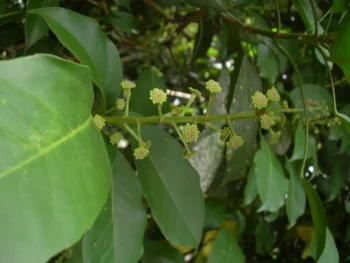
Angelica Tree: A Caribbean Native Shrub for Tropical Gardens
If you’re gardening in the warmest parts of the United States and looking for an authentic Caribbean native plant, the angelica tree (Dendropanax arboreus) might just be the hidden gem you’ve been seeking. This understated shrub brings a touch of tropical authenticity to gardens lucky enough to provide the warm, humid conditions it craves.
What is the Angelica Tree?
Don’t let the name fool you – this isn’t the towering angelica tree you might know from temperate regions. Dendropanax arboreus is actually a multi-stemmed shrub that typically stays under 13-16 feet tall, making it a much more manageable addition to most landscapes. As a perennial woody plant, it’s built to stick around for years, developing character and presence in your garden over time.
Where Does It Come From?
This shrub is a true native of the Caribbean, specifically calling Puerto Rico and the U.S. Virgin Islands home. It’s perfectly adapted to the tropical conditions of these islands, which gives us important clues about what it needs to thrive in cultivation.
- Species observed
- No observations
Why Consider Growing Angelica Tree?
Here are the compelling reasons to give this Caribbean native a spot in your garden:
- Authentic tropical character: Brings genuine Caribbean flair to your landscape
- Manageable size: Won’t outgrow most garden spaces
- Native plant benefits: Supports local ecosystems in Caribbean regions
- Low-key elegance: Provides subtle beauty without being flashy
- Perennial reliability: Once established, it’s there to stay
The Reality Check: Is This Plant Right for You?
Let’s be honest – this isn’t a plant for most U.S. gardeners. The angelica tree is strictly a tropical affair, thriving only in USDA hardiness zones 10-11. If you’re not in South Florida, Hawaii, or similar tropical climates, this shrub simply won’t survive your winters.
Additionally, as a facultative upland plant, it usually prefers non-wetland conditions but can tolerate some moisture. This makes it somewhat flexible about drainage, which is actually a plus in tropical gardens where rainfall can be unpredictable.
Growing Conditions and Care
If you’re lucky enough to garden in the right climate, here’s what your angelica tree will need:
- Climate: Warm, humid, tropical conditions year-round
- Light: Partial shade to filtered sunlight
- Soil: Well-draining but moisture-retentive soil
- Water: Regular watering, especially during dry periods
- Temperature: Protection from any cold snaps
Landscape Role and Design Ideas
Think of the angelica tree as your garden’s supporting actor rather than the star of the show. It works beautifully as:
- An understory shrub beneath taller tropical trees
- Part of a mixed native Caribbean plant community
- A backdrop for more colorful flowering plants
- Natural screening or informal hedging
The Bottom Line
The angelica tree is definitely a niche plant – perfect for the right gardener in the right climate, but completely unsuitable for most of the continental United States. If you’re gardening in Puerto Rico, the Virgin Islands, or similar tropical zones, this native shrub offers an authentic way to create habitat while adding subtle tropical character to your landscape.
For gardeners in cooler climates dreaming of tropical vibes, you’ll need to look for cold-hardy alternatives that can give you a similar aesthetic without the temperature requirements. Your local extension office can suggest native plants that will thrive in your specific growing zone.