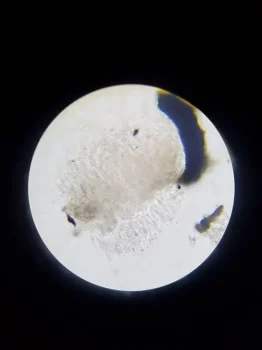
Anisomeridium Lichen: A Tiny Guardian of Your Garden’s Health
Have you ever noticed small, crusty patches on tree bark in your yard and wondered what they might be? You could be looking at anisomeridium lichen (Anisomeridium nyssigenum), a fascinating little organism that’s actually doing your garden a big favor just by being there!
What Exactly Is Anisomeridium Lichen?
First things first – anisomeridium lichen isn’t actually a plant at all! It’s a lichen, which is a remarkable partnership between a fungus and algae (or sometimes cyanobacteria) living together in perfect harmony. This tiny organism forms thin, crusty patches on tree bark, creating what looks like natural artwork on your trees.
Scientists have given this little guy a few different names over the years, including Anisomeridium juistense, Arthopyrenia willeyana, and Ditremis nyssigena. But don’t worry about memorizing those tongue-twisters – anisomeridium lichen works just fine!
Where Does It Come From?
This lichen is a true North American native, making it a legitimate part of our continent’s natural heritage. While the exact geographical distribution isn’t fully mapped out, it’s been found in various regions across North America, quietly going about its business on tree bark.
Why Should You Care About This Tiny Organism?
Here’s where things get really cool – anisomeridium lichen is like having a natural air quality monitor in your garden! Lichens are incredibly sensitive to air pollution, so when you spot them thriving on your trees, it’s actually a good sign that your local air quality is relatively healthy.
While you can’t exactly plant this lichen (more on that in a moment), having it show up naturally in your garden is definitely something to celebrate. It means you’re providing a habitat that supports native biodiversity, even at the microscopic level.
How to Identify Anisomeridium Lichen
Spotting anisomeridium lichen takes a bit of detective work, but here’s what to look for:
- Thin, crusty patches on tree bark
- Usually grayish or whitish in color
- Forms small, flat growths that seem painted onto the bark
- Most commonly found on deciduous trees
- Appears as small, irregular patches rather than large, obvious growths
Can You Grow Anisomeridium Lichen?
Here’s the thing about lichens – they’re not something you can pop into a shopping cart at the garden center. These fascinating organisms can’t be cultivated like traditional plants because they require very specific environmental conditions and form naturally over time.
However, you can definitely encourage lichens like anisomeridium to appear in your garden by:
- Maintaining healthy, mature trees (especially native species)
- Avoiding the use of harsh chemicals or pesticides
- Keeping air quality as clean as possible
- Being patient – lichens grow very slowly and appear when conditions are just right
The Bottom Line
While you can’t plant anisomeridium lichen, discovering it in your garden is like finding a tiny treasure. It’s a sign that your outdoor space is supporting native biodiversity and maintaining good environmental health. Rather than trying to remove these small crusty patches, consider them nature’s seal of approval on your gardening practices!
So next time you’re wandering around your yard, take a closer look at your tree bark. You might just spot some of these amazing little partnerships quietly doing their part to make your garden ecosystem a little more complete.