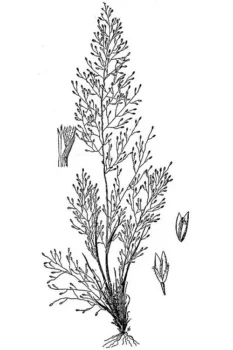
Annual Muhly: A Delicate Native Grass for Natural Landscapes
If you’re looking to add authentic native character to your landscape without overwhelming drama, annual muhly (Muhlenbergia minutissima) might be just the understated gem you need. This petite native grass brings subtle texture and natural charm to gardens across much of the American West and beyond.
What is Annual Muhly?
Annual muhly is a native graminoid—that’s botanist-speak for grass or grass-like plant—that lives up to its name by completing its entire life cycle in just one growing season. Don’t let its small stature fool you; this humble grass plays an important role in natural ecosystems and can add authentic native appeal to your garden.
You might occasionally see this plant listed under its synonym Sporobolus confusus, but rest assured—it’s the same delicate annual grass that gardeners and restoration enthusiasts have come to appreciate.
Where Does Annual Muhly Grow Naturally?
This adaptable native calls a impressive swath of the United States home, thriving naturally across fourteen states: Arizona, California, Colorado, Idaho, Montana, Nebraska, Nevada, New Mexico, Oregon, South Dakota, Texas, Utah, Washington, and Wyoming. From the arid Southwest to the Great Plains and into the Mountain West, annual muhly has proven its versatility across diverse climates and conditions.
- Species observed
- No observations
Why Consider Annual Muhly for Your Garden?
While annual muhly won’t win any awards for showstopping blooms, it offers several compelling reasons to include it in your native plant palette:
- Authentic native appeal: Perfect for gardeners wanting to create truly native landscapes
- Naturalistic texture: Adds delicate, fine-textured interest to plantings
- Adaptable moisture needs: With facultative wetland status, it can handle both wet and dry conditions
- Low maintenance: As a native annual, it requires minimal care once established
- Restoration value: Excellent choice for ecological restoration projects
What Kind of Garden Suits Annual Muhly?
This modest grass shines in specific garden styles and situations:
- Native plant gardens emphasizing local flora
- Naturalistic meadow plantings
- Xeriscapes and drought-tolerant landscapes
- Restoration and erosion control projects
- Wildlife habitat gardens (though primarily wind-pollinated)
Growing Conditions and Care
Annual muhly’s wide natural distribution hints at its adaptability, and indeed, this grass is refreshingly undemanding:
- Light: Prefers full sun conditions
- Soil: Tolerates various soil types from dry to moderately moist
- Water: Drought tolerant once established, but can handle occasional moisture
- Climate: Hardy across multiple USDA zones within its native range
Planting and Establishment Tips
Since annual muhly completes its life cycle in one year, successful establishment is key:
- Direct seed in fall for spring germination, or in early spring
- Scatter seeds lightly over prepared soil—these small seeds need light to germinate
- Keep soil moderately moist until germination occurs
- Once established, reduce watering to encourage natural drought tolerance
- Allow plants to self-seed for natural recruitment in following years
The Bottom Line
Annual muhly may not be the flashiest addition to your garden, but for gardeners committed to authentic native landscaping, it offers genuine ecological value and naturalistic appeal. Its adaptability across moisture conditions and low maintenance requirements make it an excellent choice for restoration projects and natural-style gardens. While you won’t plant it for dramatic visual impact, you’ll appreciate its contribution to creating truly native plant communities that support local ecosystems.
Consider annual muhly when you want to add another layer of authenticity to your native landscape—sometimes the most valuable plants are the ones that work quietly behind the scenes.