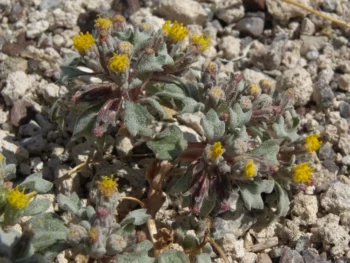
Annual Psathyrotes: A Tiny Desert Native with Big Potential
If you’re looking for a low-maintenance native plant that thrives in harsh desert conditions, let me introduce you to annual psathyrotes (Psathyrotes annua). This unassuming little herb might not win any beauty contests, but it’s a champion when it comes to surviving in tough spots where other plants would throw in the trowel.
What Is Annual Psathyrotes?
Annual psathyrotes is a native forb—that’s garden-speak for a soft-stemmed, non-woody plant—that calls the American Southwest home. As its name suggests, this plant completes its entire life cycle in one growing season, though it can sometimes act like a short-lived perennial in ideal conditions. You might also see it listed under its synonym, Bulbostylis annua, in older gardening references.
Where Does It Grow Naturally?
This hardy little native is right at home across five western states: Arizona, California, Idaho, Nevada, and Utah. It’s perfectly adapted to the challenging conditions of the American desert Southwest, where it thrives in areas that would leave most garden plants gasping for water.
- Species observed
- No observations
Why Consider Annual Psathyrotes for Your Garden?
While annual psathyrotes won’t stop traffic with showy blooms, it offers several compelling reasons to include it in your landscape:
- Ultra-low maintenance: Once established, this plant practically takes care of itself
- Drought champion: Perfect for water-wise gardening and xeriscaping
- Native benefits: Supports local ecosystems and wildlife
- Self-seeding: Will naturally return year after year without replanting
- Problem-solver: Thrives in poor soils where other plants struggle
What Does It Look Like?
Annual psathyrotes is definitely a less is more kind of plant. It produces small, inconspicuous flowers that are typically whitish or pale yellow. The plant stays fairly compact and close to the ground, making it an excellent choice for natural groundcover in desert-themed gardens.
Perfect Garden Settings
This native works beautifully in:
- Desert and xeriscape gardens
- Rock gardens with well-draining soil
- Natural landscaping projects
- Areas where you want low-maintenance groundcover
- Native plant collections
Growing Conditions and Care
Annual psathyrotes is refreshingly easy to please. Here’s what it loves:
- Sunlight: Full sun exposure
- Soil: Well-draining, sandy, or rocky soils (poor soil is actually preferred!)
- Water: Minimal once established—this plant is built for drought
- Climate zones: USDA zones 8-10
Planting and Care Tips
The beauty of annual psathyrotes lies in its simplicity. Here’s how to grow it successfully:
- Plant in areas with excellent drainage—soggy soil is this plant’s kryptonite
- Avoid rich, fertile soils that might encourage weak, floppy growth
- Water sparingly after planting, then back off once the plant is established
- No fertilizer needed—this plant actually prefers lean conditions
- Allow plants to self-seed for natural colonies
Ecological Benefits
While small, the flowers of annual psathyrotes do attract tiny pollinators like small native bees and flies. As a native plant, it also plays a role in supporting local desert ecosystems, even if that role is modest compared to showier natives.
Is Annual Psathyrotes Right for Your Garden?
This plant is perfect for gardeners who appreciate understated natives and want to create sustainable, low-water landscapes. However, if you’re looking for dramatic color or showy displays, you might want to pair it with more visually striking native companions.
Annual psathyrotes shines as a supporting player rather than a star performer. It’s the kind of plant that quietly does its job, returning reliably each year and filling in spaces where flashier plants might struggle. For desert gardeners and native plant enthusiasts, that dependable, no-fuss nature makes it a valuable addition to the palette.