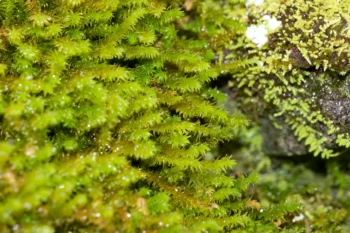
Anomodon Moss: A Tiny Ground Cover with Big Garden Potential
If you’ve ever taken a closer look at the green carpets growing on rocks and fallen logs in shaded woodland areas, you might have encountered anomodon moss (Anomodon viticulosus). This delightful little bryophyte might be small in stature, but it packs a surprising punch when it comes to adding natural charm to your garden landscape.
What Exactly is Anomodon Moss?
Anomodon moss is a native North American bryophyte – that’s the fancy scientific term for the group that includes mosses, liverworts, and hornworts. Unlike the flowering plants most gardeners are familiar with, mosses are herbaceous plants that prefer to attach themselves to solid surfaces like rocks, tree bark, or decaying wood rather than growing directly in soil.
This particular moss creates dense, dark green mats with creeping stems adorned with tiny, overlapping leaves. When you get up close (and trust me, it’s worth the closer look), you’ll notice it has an almost feathery appearance that adds wonderful texture to any shaded corner of your garden.
Where Does Anomodon Moss Call Home?
As a native species, anomodon moss naturally occurs throughout eastern North America, including the northeastern United States and southeastern Canada. In the United States, it has been documented growing in states like New Jersey, though its range likely extends beyond what current records show.
- Species observed
- No observations
Is Anomodon Moss Beneficial in Your Garden?
Absolutely! While this moss won’t attract pollinators like flowering plants (mosses don’t produce flowers), it offers several unique benefits:
- Creates natural ground cover in challenging shaded areas where grass struggles
- Adds rich texture and year-round green color to rock gardens and woodland landscapes
- Provides habitat and potentially nesting material for small insects and invertebrates
- Helps prevent soil erosion on slopes and around tree bases
- Requires virtually no maintenance once established
How to Identify Anomodon Moss
Spotting anomodon moss in the wild (or potentially in your garden) is easier when you know what to look for:
- Growth pattern: Forms dense, creeping mats that spread across surfaces
- Color: Rich dark green, maintaining color through most seasons
- Texture: Feathery appearance with small, overlapping leaves on creeping stems
- Preferred spots: Look for it on rocks, fallen logs, tree bases, and other solid surfaces in shaded areas
- Habitat: Thrives in moist, shaded woodland environments
Creating the Right Conditions
If you’re hoping to encourage anomodon moss in your landscape, focus on creating the conditions it loves naturally:
- Provide plenty of shade or dappled sunlight
- Maintain consistent moisture without creating waterlogged conditions
- Include rocks, logs, or other solid surfaces for attachment
- Avoid areas with heavy foot traffic
- Consider it for zones 3-8, where it’s naturally hardy
A Small Plant with Big Impact
While anomodon moss might not be the showstopper of your garden, it’s one of those understated natives that adds authentic woodland character to shaded spaces. Whether it appears naturally in your landscape or you encourage its growth by creating suitable habitat, this little moss proves that sometimes the smallest plants can make the biggest difference in creating a truly natural garden ecosystem.
Next time you’re walking through a wooded area, take a moment to appreciate these tiny green carpets – you might just find yourself wanting to welcome them into your own garden sanctuary.