Antilles Clubmoss: A Fascinating Ancient Plant for Your Tropical Garden
Meet the Antilles clubmoss (Huperzia reflexa), a remarkable little plant that’s been quietly doing its thing for millions of years. This isn’t your typical garden flower or shrub – it’s actually a living fossil that predates dinosaurs! If you’re curious about adding something truly unique to your tropical landscape, this ancient beauty might just be the conversation starter your garden needs.
What Exactly Is Antilles Clubmoss?
Don’t let the name fool you – despite being called a moss, Huperzia reflexa is actually a clubmoss, which is an entirely different type of plant. Clubmosses are part of an ancient group of plants called lycopods that have been around for over 400 million years. They’re more closely related to ferns than to true mosses, and they reproduce using spores rather than seeds or flowers.
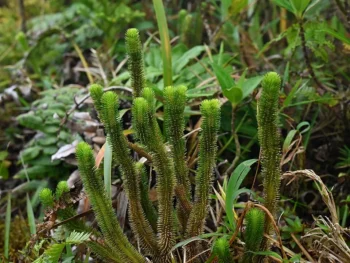
This perennial plant has a fascinating growth habit as a forb herb, meaning it’s a vascular plant without significant woody tissue. What makes it special is its needle-like leaves that spiral around the stem, creating an almost prehistoric appearance that can transport you back in time just by looking at it.
Where Does It Call Home?
The Antilles clubmoss is native to Puerto Rico and grows naturally in the Caribbean region. It’s perfectly adapted to the warm, humid conditions of tropical islands, where it thrives in the filtered light of forest understories.
- Species observed
- No observations
Is It Beneficial to Have in Your Garden?
If you’re gardening in a tropical or subtropical climate (USDA zones 10-11), the Antilles clubmoss can be a fascinating addition to your landscape. Here’s why you might want to consider it:
- It’s a living piece of natural history that adds educational value to your garden
- Perfect for creating a prehistoric or ancient garden theme
- Excellent for naturalistic shade gardens and rock gardens
- Requires minimal maintenance once established in the right conditions
- Adds unique texture and form that contrasts beautifully with flowering plants
However, it’s important to note that this isn’t a plant for everyone. It has very specific growing requirements and won’t thrive in typical garden conditions outside of tropical climates.
How to Identify Antilles Clubmoss
Spotting Huperzia reflexa in the wild or in cultivation is all about knowing what to look for:
- Small, needle-like leaves arranged in spirals around the stem
- Low-growing, moss-like appearance but with a more structured form
- Lacks flowers or obvious seeds – reproduces via tiny spores
- Prefers shaded, humid environments
- Has a somewhat prehistoric or ancient appearance
Growing Conditions and Care
The Antilles clubmoss has some pretty specific needs, thanks to its Caribbean heritage:
- Light: Filtered shade to partial shade – avoid direct sunlight
- Moisture: Consistently moist but well-draining soil
- Humidity: High humidity is essential for success
- Temperature: Warm tropical conditions year-round
- Soil: Well-draining, organic-rich soil that doesn’t become waterlogged
The plant has a facultative wetland status, meaning it can handle both wetland and non-wetland conditions, making it somewhat adaptable within its preferred climate range.
Is This Plant Right for Your Garden?
The Antilles clubmoss is definitely a specialty plant that won’t suit every garden or gardener. It’s perfect if you:
- Live in a tropical or subtropical climate
- Have a shaded area with high humidity
- Enjoy unique, conversation-starting plants
- Want to create a prehistoric or ancient-themed garden space
- Appreciate low-maintenance plants once established
However, you might want to pass if you’re looking for colorful flowers, live in a dry climate, or don’t have the specific conditions this ancient plant requires to thrive.
Whether you choose to grow it or simply admire it in its natural habitat, the Antilles clubmoss is a fascinating reminder of the incredible diversity and longevity of plant life on our planet. It’s not just a plant – it’s a living link to Earth’s ancient past!