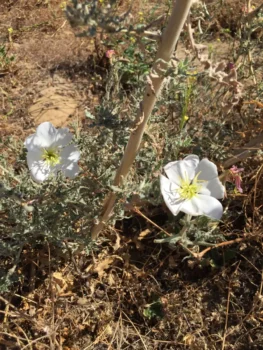
Antioch Dunes Evening Primrose: A Rare California Treasure You Can’t (and Shouldn’t) Grow
Meet one of California’s most exclusive plants – so exclusive, in fact, that you literally can’t invite it into your garden. The Antioch Dunes evening primrose (Oenothera deltoides howellii) is like the unicorn of the plant world: absolutely magical, but you’re more likely to spot Bigfoot in your backyard than find this beauty at your local nursery.
What Makes This Plant So Special?
This perennial forb is a member of the evening primrose family, producing cheerful yellow flowers that bloom in the evening hours. As a herbaceous plant without woody stems, it stays close to the ground and spreads through sandy dune environments – or at least, it used to.
The Antioch Dunes evening primrose is native exclusively to California, and not just anywhere in the Golden State. This picky plant calls only one tiny spot home: the Antioch Dunes in Contra Costa County. We’re talking about a native range smaller than many shopping centers!
- Species observed
- No observations
Why You Can’t (and Shouldn’t) Grow It
Critical Conservation Alert: This plant is federally endangered with a rarity status that puts it on the brink of extinction. The Antioch Dunes evening primrose is so rare that it’s essentially extinct in the wild, surviving only in specialized botanical gardens and research facilities.
Here’s why this matters to you as a gardener:
- It’s not available through any commercial sources
- Growing it outside authorized conservation programs could be illegal
- It requires extremely specific growing conditions that can’t be replicated in home gardens
- Any seeds or plants should remain with conservation professionals
What Happened to This Rare Beauty?
The Antioch Dunes evening primrose once thrived in the unique sandy dune ecosystem near Antioch, California. Unfortunately, industrial development, sand mining, and invasive species have destroyed most of its habitat. This little plant became a victim of habitat loss on an epic scale.
Supporting Conservation from Your Garden
While you can’t grow the Antioch Dunes evening primrose, you can still support conservation efforts and enjoy similar native California plants:
- Consider other native evening primroses like the common evening primrose (Oenothera biennis)
- Support organizations working to preserve endangered California natives
- Create habitat for native pollinators who might have visited this species
- Choose other rare-but-available California natives for your garden
A Living Lesson in Conservation
The story of the Antioch Dunes evening primrose serves as a powerful reminder of how quickly we can lose irreplaceable natural treasures. This plant, with its modest yellow blooms and sandy home, represents thousands of years of evolution packed into one small corner of California.
While we can’t bring this beauty into our gardens, we can honor its memory by making thoughtful choices about the native plants we do grow. Every native plant we choose over a non-native alternative is a small victory for conservation.
Sometimes the most important gardening advice is knowing what not to plant – and in this case, it’s about respecting the rarity and conservation needs of one of California’s most endangered botanical residents.