Appalachian Avens: A Rare Mountain Treasure Worth Protecting
If you’ve ever hiked the high peaks of the Southern Appalachians and spotted a cheerful yellow flower blooming from seemingly bare rock, you might have encountered one of North America’s rarest wildflowers. Meet Geum radiatum, better known as Appalachian avens—a plant so special and so rare that it’s earned federal endangered species protection.
What Makes Appalachian Avens So Special?
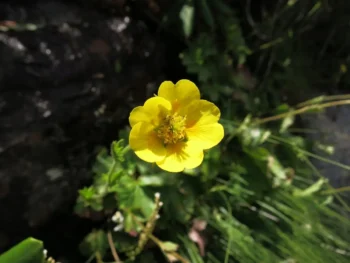
Appalachian avens is a perennial forb that has mastered the art of living on the edge—literally. This remarkable plant calls the exposed granite domes and rocky outcrops of high-elevation mountains its home. With its bright yellow, five-petaled flowers that bloom from late spring into early summer, it creates stunning natural displays against the stark beauty of bare rock faces.
The plant forms low-growing rosettes of distinctive three-part compound leaves, and after flowering, produces attractive feathery seed heads that dance in mountain breezes. It’s a true testament to nature’s ability to find beauty in the most challenging places.
Where Does It Call Home?
This mountain specialist has an extremely limited range, found only in North Carolina and Tennessee within the Southern Appalachian Mountains. It clings to life on high-elevation granite domes, rock faces, and exposed outcrops where few other plants can survive the harsh conditions of intense sun, driving winds, and thin soils.
- Species observed
- No observations
Why You Shouldn’t Try to Grow It (But Should Definitely Care About It)
Here’s where we need to have a serious conversation about conservation. Appalachian avens carries a Global Conservation Status of S2, meaning it’s imperiled, and it’s federally listed as endangered. With only 6 to 20 known populations and fewer than 3,000 individual plants remaining in the wild, every single plant is precious.
We strongly recommend against attempting to grow Appalachian avens for several important reasons:
- It requires extremely specialized growing conditions that are nearly impossible to replicate in home gardens
- Removal from wild populations could further threaten this endangered species
- Seeds and plants should only be handled by conservation professionals
- Its natural habitat needs are so specific that cultivation attempts usually fail
What It Needs to Survive
Understanding why Appalachian avens is so difficult to grow helps us appreciate its remarkable adaptation to extreme conditions. In its natural habitat, it requires:
- Excellent drainage provided by rocky, sandy soils
- Full sun to partial shade exposure
- Cool, moist conditions despite the rocky environment
- The unique microclimate of high-elevation granite outcrops
- USDA hardiness zones 5-7
Supporting Conservation Instead
Rather than trying to grow this rare beauty, there are meaningful ways to support its conservation:
- Visit it respectfully in its natural habitat (look but don’t touch!)
- Support organizations working on Southern Appalachian conservation
- Choose other native mountain wildflowers for your rock garden
- Spread awareness about the importance of protecting rare plants
Garden-Friendly Alternatives
If you’re drawn to the charm of mountain wildflowers, consider these more garden-appropriate alternatives that can bring similar beauty to your landscape:
- Wild Ginger (Asarum canadense) for shady rock gardens
- Wild Columbine (Aquilegia canadensis) for rocky, well-drained spots
- Appalachian Barren Strawberry (Waldsteinia fragarioides) for groundcover
- Fire Pink (Silene virginica) for dramatic color in rock gardens
A Living Symbol of Conservation
Appalachian avens represents something bigger than just a pretty flower—it’s a symbol of the unique biodiversity found in our mountain ecosystems and the urgent need to protect these special places. Every population that survives is a victory for conservation efforts and a reminder of what we stand to lose if we don’t act as careful stewards of our natural heritage.
So while you won’t be adding Appalachian avens to your garden wishlist, you can add it to your conservation consciousness. Sometimes the best way to love a plant is to admire it from a respectful distance and work to ensure it has a future in the wild places where it belongs.