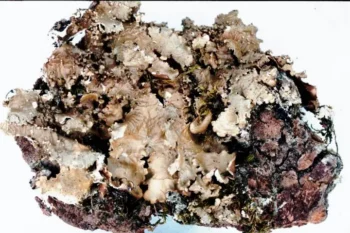
Discovering the Appalachian Punctelia: A Native Lichen Worth Knowing
Have you ever noticed those flat, leafy-looking patches growing on tree bark or rocks in your yard and wondered what they were? You might have been looking at a lichen! Today, we’re diving into the fascinating world of Punctelia appalachensis, commonly known as the Appalachian punctelia – a native lichen that’s more interesting than you might think.
What Exactly Is the Appalachian Punctelia?
The Appalachian punctelia isn’t a plant in the traditional sense – it’s actually a lichen. Think of lichens as nature’s ultimate partnership: they’re made up of fungi and algae (or sometimes cyanobacteria) living together in perfect harmony. The fungi provide structure and protection, while the algae photosynthesize to create food for both partners. Pretty cool, right?
This particular lichen species is native to North America and was previously known by the scientific synonym Parmelia appalachensis before being reclassified.
Where You’ll Find This Native Beauty
As its common name suggests, the Appalachian punctelia calls the Appalachian Mountains region of eastern North America home. You’re most likely to spot this lichen growing naturally on tree bark and rock surfaces throughout this mountainous region.
What Does It Look Like?
The Appalachian punctelia has a distinctive appearance that makes it relatively easy to identify once you know what to look for:
- Gray-green coloration that can vary slightly depending on conditions
- Foliose (leafy) structure with broad, flat lobes
- Grows in rosette-like patches on bark and rock surfaces
- Has a somewhat leathery texture
Is It Good for Your Garden?
Here’s where things get interesting! While you can’t exactly plant the Appalachian punctelia like you would a flower or shrub, having it naturally occur in your landscape is actually a wonderful sign. Lichens are excellent indicators of air quality – they’re super sensitive to pollution, so their presence means you’ve got clean air in your area.
If you’re lucky enough to have this lichen growing naturally on trees or rocks in your yard, consider it a badge of honor for your local environment. These lichens don’t harm the trees they grow on – they’re just using the bark as a surface to call home.
The Bottom Line for Gardeners
Unlike traditional garden plants, you can’t cultivate or propagate the Appalachian punctelia. It’s not something you can buy at a nursery or grow from seed. Instead, it will appear naturally in suitable environments with good air quality.
If you spot what you think might be Appalachian punctelia in your landscape, the best thing you can do is simply appreciate it! Avoid using harsh chemicals or pressure washing areas where lichens are growing, as these can damage or kill these sensitive organisms.
So the next time you’re wandering around your yard and notice those gray-green, leafy patches on tree bark or rocks, take a moment to appreciate the Appalachian punctelia. It’s a sign that your little corner of the world is healthy and clean – and that’s something worth celebrating!