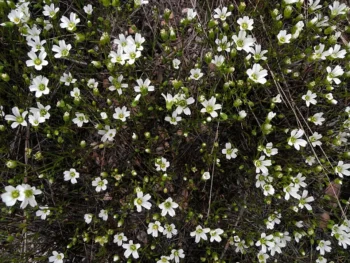
Appalachian Stitchwort: A Delicate Native Ground Cover for Rocky Gardens
If you’re looking for a charming native plant that brings subtle beauty to challenging garden spots, meet Appalachian stitchwort (Minuartia glabra). This petite perennial might not win any showiest flower contests, but it has a quiet elegance that makes it perfect for gardeners who appreciate understated natural beauty.
What Makes Appalachian Stitchwort Special
Appalachian stitchwort is a true native gem, naturally occurring across 16 states from Alabama all the way up to Maine. This herbaceous perennial forms low, spreading mats that hug the ground, making it an excellent choice for areas where you need gentle ground coverage without aggressive spreading.
The plant produces tiny white flowers that may be small in stature but are perfectly proportioned for its delicate frame. Don’t expect bold, showy blooms – instead, think of it as nature’s version of baby’s breath, but tougher and more purposeful in the landscape.
- Species observed
- No observations
Where Appalachian Stitchwort Thrives
This little native has some specific preferences that make it ideal for certain garden situations:
- Rock gardens: Its low, mat-forming habit makes it perfect for tucking between stones
- Alpine gardens: Naturally adapted to mountain conditions
- Naturalistic landscapes: Adds authentic native character to wildflower areas
- Challenging spots: Great for areas with thin, well-draining soil where other plants struggle
Growing Conditions and Care
Appalachian stitchwort is hardy in USDA zones 3-7, making it suitable for cooler climates where it naturally occurs. Here’s what this native prefers:
- Sunlight: Partial shade to full sun
- Soil: Well-draining soil is absolutely essential – soggy conditions will spell doom
- Maintenance: Once established, it’s remarkably low-maintenance
- Watering: Drought-tolerant once established, but appreciates occasional water during dry spells
Why Choose This Native Plant
While Appalachian stitchwort may not be the star of your garden show, it serves important roles that flashier plants often can’t fulfill. Its small flowers provide nectar for tiny native insects and beneficial pollinators that larger blooms might overlook. Plus, as a native species, it supports local ecosystems in ways that non-native alternatives simply cannot.
The plant’s scientific name, Minuartia glabra, has quite a few synonyms in botanical literature, including Arenaria glabra, which you might encounter if you’re plant shopping or researching growing tips.
Is Appalachian Stitchwort Right for Your Garden
This native works best for gardeners who:
- Appreciate subtle, naturalistic beauty over bold statements
- Have rock gardens, alpine areas, or challenging growing conditions
- Want to support native plant communities and local wildlife
- Prefer low-maintenance plants once established
However, it might not be the best choice if you’re looking for:
- Bold, colorful flower displays
- Plants for consistently moist or poorly-draining areas
- Ground covers for heavy foot traffic areas
Getting Started
Finding Appalachian stitchwort might require a bit of hunting – it’s not as commonly available as some native plants, but specialty native plant nurseries or wildflower suppliers should be able to help. When you do find it, plant it in spring in a well-prepared, well-draining spot where it can slowly establish its root system.
Remember, this is a plant that rewards patience. It may take a season or two to really get established, but once it does, you’ll have a charming, low-maintenance native that brings authentic Appalachian character to your garden.