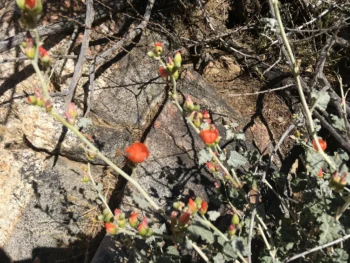
Apricot Globemallow: A Desert Beauty That Thrives on Neglect
If you’re looking for a plant that delivers stunning blooms while practically growing itself, meet the apricot globemallow (Sphaeralcea ambigua ambigua). This charming native wildflower is like that friend who’s always cheerful and never asks for much—except maybe a little sunshine and some well-draining soil.
What Makes Apricot Globemallow Special?
Apricot globemallow is a native perennial forb that calls the American Southwest home. As a member of the mallow family, it produces delicate cup-shaped flowers in warm shades of orange and apricot that seem to glow against its silvery-green foliage. The plant forms low-growing clumps that spread naturally, creating lovely drifts of color in the landscape.
This resilient native has earned its place in water-wise gardens across the region, proving that you don’t need to sacrifice beauty for sustainability.
Where Does It Grow Naturally?
Apricot globemallow is native to four southwestern states: Arizona, California, Nevada, and Utah. In the wild, you’ll find it thriving in desert washes, rocky slopes, and open areas where many other plants struggle to survive. This natural distribution tells us everything we need to know about its preferences—it loves heat, tolerates poor soils, and laughs in the face of drought.
- Species observed
- No observations
Why Your Garden (and Local Wildlife) Will Love It
Here’s where apricot globemallow really shines as a garden plant:
- Pollinator magnet: Bees, butterflies, and hummingbirds can’t resist those cheerful orange blooms
- Long blooming season: Flowers appear from spring through fall with adequate moisture
- Drought champion: Once established, it needs minimal supplemental watering
- Low maintenance: No fussy fertilizing or frequent pruning required
- Native plant benefits: Supports local ecosystems and requires fewer resources
Perfect Garden Situations
Apricot globemallow is tailor-made for several garden styles:
- Desert and xeriscape gardens where water conservation is key
- Rock gardens and naturalized areas
- Wildflower meadows and prairie-style plantings
- Pollinator gardens focused on native species
- Low-maintenance landscape borders
Growing Conditions and Care
The beauty of apricot globemallow lies in its simplicity. Here’s what it needs to thrive:
Climate: Hardy in USDA zones 4-10, this plant handles both cold winters and scorching summers with ease.
Sun and Soil: Full sun is essential—at least 6 hours daily. As for soil, well-draining is the key requirement. Sandy, rocky, or clay soils are all fine as long as water doesn’t pool around the roots.
Water Needs: Here’s the best part—after the first growing season, apricot globemallow becomes remarkably drought tolerant. During establishment, provide moderate water, then gradually reduce to occasional deep watering during extended dry periods.
Planting and Care Tips
Getting started with apricot globemallow is refreshingly straightforward:
- Plant in spring after the last frost for best establishment
- Space plants 12-18 inches apart to allow for natural spreading
- Water regularly the first year, then reduce significantly
- Deadhead spent flowers to encourage continued blooming
- Cut back to ground level in late winter before new growth appears
- No fertilizer needed—this plant actually prefers lean soils
Is This Plant Right for Your Garden?
Apricot globemallow is an excellent choice if you want a beautiful, low-maintenance native plant that supports local wildlife. It’s particularly perfect for gardeners in the Southwest who are embracing water-wise landscaping or anyone looking to create habitat for pollinators.
The only gardeners who might want to look elsewhere are those in areas with heavy clay soils that don’t drain well, or regions with high humidity and frequent summer rainfall—this desert native prefers things on the dry side.
For everyone else, apricot globemallow offers the perfect combination of beauty, sustainability, and ease of care. Plant it once, and you’ll enjoy its cheerful blooms and pollinator visitors for years to come, all while using less water and supporting your local ecosystem. Now that’s what we call a win-win!