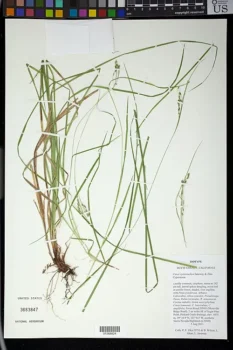
Arching Sedge: A California Native Worth Knowing About
If you’re exploring native plants for your California garden, you might stumble across the intriguing arching sedge (Carex cyrtostachya). This perennial sedge is one of California’s native treasures, though it’s not exactly what you’d call a household name in the gardening world.
What is Arching Sedge?
Arching sedge is a grass-like perennial plant that belongs to the sedge family (Cyperaceae). Don’t let the grass-like description fool you into thinking it’s boring – sedges are actually quite different from true grasses and often bring unique textures and forms to the garden landscape.
As its common name suggests, this sedge likely has an arching growth habit, creating graceful, curved lines that can add movement and softness to plantings.
Where Does It Grow Naturally?
Arching sedge is native to the lower 48 states, with its natural range documented in California. This makes it a true California native, evolved to thrive in the Golden State’s unique climate and conditions.
- Species observed
- No observations
The Challenge with Arching Sedge
Here’s where things get a bit mysterious – arching sedge isn’t widely available in the nursery trade, and detailed growing information is surprisingly scarce. This could mean several things:
- It might be a rare or uncommon species
- It could have very specific habitat requirements
- It may not have been extensively studied or cultivated
- It might be confused with other, more common sedge species
Should You Try Growing Arching Sedge?
If you’re a native plant enthusiast and happen to come across arching sedge, it could be an interesting addition to your collection. As a California native, it’s naturally adapted to local conditions and would support regional ecosystem health.
However, given the limited information available, you might want to consider these well-documented California native sedges instead:
- Berkeley sedge (Carex divulsa) – great for dry shade
- Dune sedge (Carex pansa) – excellent native lawn alternative
- San Diego sedge (Carex spissa) – beautiful for rain gardens
General Sedge Growing Tips
If you do decide to try growing arching sedge, here are some general principles that work for most native California sedges:
- Most prefer moist to moderately moist soil
- Many tolerate shade better than full sun
- They typically need little to no fertilizer once established
- Dividing clumps every few years can help maintain vigor
- Fall or early spring planting usually works best
The Bottom Line
Arching sedge represents one of those native plants that reminds us how much we still have to learn about our local flora. While it may not be the easiest plant to find or grow, its status as a California native makes it ecologically valuable. If you’re lucky enough to encounter it, consider yourself part of a select group of gardeners exploring the lesser-known gems of California’s plant kingdom.
For most gardeners, starting with better-documented native sedges might be the wiser choice, but there’s always room in the gardening world for a little mystery and experimentation!