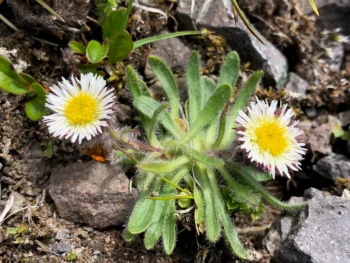
Arctic Alpine Fleabane: A Hardy Native Wildflower for Challenging Gardens
If you’re looking for a tough-as-nails native wildflower that can handle whatever Mother Nature throws at it, meet arctic alpine fleabane (Erigeron humilis). This plucky little perennial might have a somewhat unglamorous common name, but don’t let that fool you – it’s a charming addition to gardens that need a plant with serious staying power.
What Is Arctic Alpine Fleabane?
Arctic alpine fleabane is a native North American perennial forb that belongs to the aster family. As a forb, it’s an herbaceous plant without woody tissue, meaning it dies back to the ground each winter and returns fresh each spring. This hardy wildflower has earned its place in some of the continent’s most challenging environments, from the Arctic tundra to high mountain slopes.
You might also encounter this plant listed under its botanical synonyms, including Erigeron unalaschkensis or Erigeron uniflorus var. unalaschkensis, so don’t be confused if you see these names in plant catalogs or field guides.
Where Arctic Alpine Fleabane Calls Home
This resilient native has one of the most impressive geographic ranges you’ll find in the plant world. Arctic alpine fleabane is native to Alaska, Canada (including Alberta, British Columbia, Manitoba, Ontario, Quebec, Yukon, Northwest Territories, and Nunavut), Greenland, and several western U.S. states including Colorado, Idaho, Montana, Utah, and Wyoming. It’s also found in Labrador, showcasing its incredible adaptability to harsh, northern climates.
- Species observed
- No observations
Why You’ll Love This Little Survivor
Arctic alpine fleabane brings understated charm to the garden with its cheerful daisy-like flowers. Each bloom features white or pale pink petals radiating around a bright yellow center, creating classic wildflower appeal. The flowers are typically about half an inch across and appear from summer into early fall, providing late-season color when many other plants are winding down.
What really makes this plant shine is its incredible toughness. If you have a challenging spot in your garden – maybe a rocky slope, a dry corner, or an area with poor soil – arctic alpine fleabane might just be your new best friend.
Perfect Garden Situations
Arctic alpine fleabane excels in several garden styles:
- Rock gardens: Its compact size and drought tolerance make it perfect for tucking between stones
- Alpine gardens: A natural choice for recreating high-elevation plant communities
- Xeriscape designs: Thrives with minimal water once established
- Naturalized wildflower areas: Adds authentic native character to informal plantings
- Ground cover: Forms low mats that help suppress weeds in tough spots
Growing Conditions and Care
The beauty of arctic alpine fleabane lies in its low-maintenance nature. This plant is remarkably adaptable and actually prefers the kinds of conditions that challenge other garden plants.
Sunlight: Thrives in full sun but tolerates partial shade
Soil: Well-draining soil is essential – it actually prefers poor, rocky, or sandy soils over rich garden earth
Water: Drought tolerant once established; avoid overwatering as this can lead to problems
Climate: Hardy in USDA zones 2-7, making it suitable for even the coldest gardens
Planting and Care Tips
Getting arctic alpine fleabane established is straightforward:
- Plant in spring after the last frost
- Space plants about 6-12 inches apart
- Water regularly the first season to help establishment
- Once established, water sparingly – this plant prefers to stay on the dry side
- No fertilizer needed – rich conditions can actually make the plant less hardy
- Deadhead spent flowers if desired, though many gardeners leave them for wildlife
Wetland Connections and Wildlife Benefits
Interestingly, arctic alpine fleabane has a facultative wetland status in Alaska, the Arid West, and Western Mountains regions. This means while it usually grows in wetland environments in nature, it’s adaptable enough to thrive in non-wetland garden conditions too.
Like many native wildflowers, arctic alpine fleabane provides valuable resources for pollinators, particularly smaller native bees and butterflies who appreciate its accessible flower structure and nectar.
The Bottom Line
Arctic alpine fleabane might not be the showiest plant in the garden, but it more than makes up for it with reliability and authentic native character. If you’re looking to support local ecosystems, need a plant for challenging conditions, or simply want to try something different, this hardy little fleabane deserves a spot in your garden. Plus, there’s something deeply satisfying about successfully growing a plant that thrives in some of the world’s most extreme environments – right in your own backyard.