Arctic Catchfly: A Hardy Native Wildflower for Cold-Climate Gardens
If you’re gardening in the far north and looking for a truly resilient native wildflower, meet the arctic catchfly (Silene involucrata involucrata). This tough little perennial is one of nature’s most cold-hardy plants, thriving in conditions that would send most garden flowers running for cover. While it might not be the showiest bloom in your garden, this unassuming native has a quiet charm that’s perfect for specialized landscapes.
What Is Arctic Catchfly?
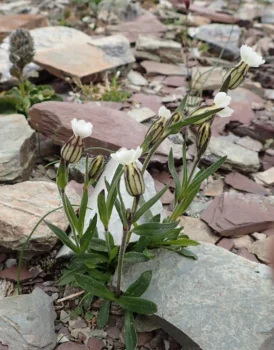
Arctic catchfly is a low-growing perennial forb—essentially an herbaceous flowering plant without woody stems. This compact wildflower forms dense, cushion-like mats that hug the ground, rarely growing taller than a few inches. The plant produces small, delicate flowers with deeply notched white to pale pink petals that seem to dance in the arctic breeze.
You might also encounter this plant listed under several botanical synonyms, including Gastrolychnis involucrata, Lychnis affinis, or Melandrium affine, but they all refer to the same hardy arctic survivor.
Where Arctic Catchfly Calls Home
This remarkable plant is native to some of the world’s most challenging environments. You’ll find arctic catchfly naturally occurring across Alaska, northern Canada (including Alberta, British Columbia, Manitoba, Ontario, Quebec, Yukon, Northwest Territories, Nunavut, and Labrador), and Greenland. It’s part of the circumpolar arctic flora, meaning it also grows across similar latitudes in northern Europe and Asia.
- Species observed
- No observations
Why Consider Arctic Catchfly for Your Garden?
Let’s be honest—arctic catchfly isn’t for everyone. This plant has very specific needs and is really only suitable for gardeners in extremely cold climates (USDA hardiness zones 1-4). But if you live in the far north, here’s why you might fall in love with this little survivor:
- Unmatched cold tolerance: This plant laughs at temperatures that would kill most perennials
- Low maintenance: Once established, it requires minimal care
- Native pollinator support: Attracts arctic flies and small bees
- Unique aesthetic: Adds authentic arctic character to specialized gardens
- Ground cover potential: Forms attractive mats in rock gardens
Perfect Garden Settings
Arctic catchfly shines in specialized garden settings where its unique characteristics can be appreciated:
- Alpine and rock gardens: Its cushion-like growth habit fits perfectly among stones
- Native plant gardens: Essential for authentic northern native landscapes
- Cold-climate xeriscapes: Thrives with minimal water once established
- Educational gardens: Fascinating example of plant adaptation to extreme conditions
Growing Arctic Catchfly Successfully
Growing arctic catchfly requires understanding its extreme origins. This isn’t a plant you can coddle—it actually prefers harsh conditions!
Essential Growing Conditions
- Sunlight: Full sun is essential
- Soil: Well-draining, sandy or rocky soil; avoid rich, fertile soils
- Water: Drought-tolerant once established; avoid overwatering
- Temperature: Requires cold winter temperatures for proper dormancy
- Climate: Only suitable for USDA zones 1-4
Planting and Care Tips
Successfully growing arctic catchfly is all about mimicking its natural habitat:
- Start with seeds: Seeds require cold stratification for several months
- Plant in fall: Allow natural winter conditions to break seed dormancy
- Choose the right spot: Select the most exposed, windiest location in your garden
- Improve drainage: Add coarse sand or gravel to heavy soils
- Skip the fertilizer: This plant prefers lean, nutrient-poor conditions
- Be patient: Growth is slow, and plants may take years to establish
Is Arctic Catchfly Right for Your Garden?
Arctic catchfly is definitely a specialized plant for specialized gardens. If you live outside zones 1-4, this plant simply won’t survive your climate. Even within its suitable range, it’s not going to give you the bold color displays of more conventional perennials.
However, if you’re passionate about native plants, live in an extremely cold climate, and want to create an authentic arctic landscape, arctic catchfly offers something truly unique. It’s a living piece of the far north that brings the wild beauty of the arctic tundra right to your garden.
For gardeners in warmer zones looking for native alternatives, consider other Silene species native to your region, or explore cold-hardy natives like wild bergamot, purple prairie clover, or native sedums that might better suit your climate.
Arctic catchfly reminds us that sometimes the most extraordinary plants are the ones that have learned to thrive where others fear to grow. In the right garden and the right climate, this humble wildflower becomes a testament to the incredible adaptability of nature.