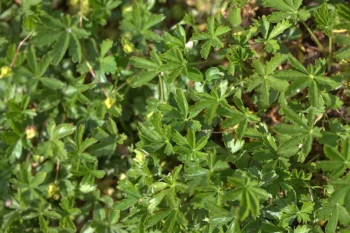
Arctic Cinquefoil: The Hardy Native Ground Cover Your Northern Garden Needs
If you’re a gardener in the northern regions looking for a tough, beautiful, and truly native ground cover, let me introduce you to arctic cinquefoil (Potentilla nana). This little powerhouse of a plant might just become your new favorite addition to challenging garden spots where other plants fear to tread.
What is Arctic Cinquefoil?
Arctic cinquefoil is a low-growing perennial forb that’s as hardy as they come. This native wildflower produces cheerful yellow flowers with five petals (hence cinquefoil, which means five-leaf) that brighten up the landscape during the summer months. Don’t let its delicate appearance fool you – this plant is built to survive in some of the harshest conditions on Earth.
As a herbaceous perennial, arctic cinquefoil lacks woody stems but returns year after year from its underground parts. It forms attractive mats of palmately divided leaves that provide excellent ground coverage throughout the growing season.
Where Does Arctic Cinquefoil Call Home?
This remarkable plant is native to an impressive range across North America’s northern regions. You’ll find it naturally growing in Alaska, Canada (including Alberta, British Columbia, Manitoba, Quebec, Yukon, Northwest Territories, and Nunavut), Greenland, and even extending south into the mountainous areas of Montana, Washington, and Wyoming in the lower 48 states. It’s also found in Labrador, completing its circumpolar distribution.
- Species observed
- No observations
The fact that arctic cinquefoil thrives across such a vast northern range tells you everything you need to know about its adaptability and toughness.
Why Should You Plant Arctic Cinquefoil?
There are several compelling reasons to consider adding this native beauty to your landscape:
- True native plant: Supporting native species helps maintain local ecosystems and provides habitat for native wildlife
- Extremely hardy: Thrives in USDA zones 1-6, making it perfect for cold-climate gardens
- Low maintenance: Once established, it requires minimal care and can handle neglect
- Pollinator friendly: The bright yellow flowers attract native bees, flies, and other small pollinators
- Versatile growing conditions: Handles both wetland and non-wetland situations (facultative wetland status)
- Erosion control: The mat-forming habit helps stabilize soil on slopes
Perfect Garden Spots for Arctic Cinquefoil
Arctic cinquefoil shines in several garden settings:
- Rock gardens: Its low-growing habit and drought tolerance make it ideal for rocky, well-draining spots
- Alpine gardens: A natural choice for mountain-style landscapes
- Wildflower meadows: Adds native beauty to naturalized areas
- Erosion-prone slopes: Helps stabilize soil while looking attractive
- Low-maintenance ground cover areas: Perfect for spots where you want coverage without constant care
Growing Arctic Cinquefoil Successfully
The good news is that arctic cinquefoil is refreshingly easy to grow if you can provide its basic needs:
Light Requirements: This plant adapts well to both full sun and partial shade, making it flexible for various garden locations.
Soil Needs: The key to success is well-draining soil. Arctic cinquefoil tolerates poor soils and doesn’t need rich, fertile conditions. In fact, it often performs better in lean soils than in heavily fertilized ones.
Water Requirements: Once established, this plant is quite drought tolerant. However, it can also handle wetter conditions, as evidenced by its facultative wetland status across multiple regions.
Climate Preferences: This plant loves cool climates and may struggle in hot, humid conditions. It’s perfectly suited for northern gardens where temperatures stay relatively cool.
Planting and Care Tips
Getting arctic cinquefoil established in your garden is straightforward:
- Best planting time: Spring, after the last frost
- Soil preparation: Ensure good drainage – this is the most critical factor for success
- Spacing: Allow room for the plant to spread and form its natural mat
- Watering: Water regularly during the first growing season to help establishment, then reduce as the plant matures
- Fertilizing: Minimal to no fertilization needed – this plant thrives in lean conditions
- Maintenance: Very low maintenance once established; simply remove any dead foliage in spring
Is Arctic Cinquefoil Right for Your Garden?
Arctic cinquefoil is an excellent choice if you:
- Garden in zones 1-6
- Want to support native plants and pollinators
- Need ground cover for challenging spots
- Prefer low-maintenance plants
- Have well-draining soil or can create it
- Enjoy naturalized, wildflower-style gardens
However, this plant might not be the best fit if you garden in hot, humid climates or prefer formal, manicured landscapes.
A Hardy Native Worth Growing
Arctic cinquefoil proves that native plants can be both beautiful and practical. This tough little perennial offers cheerful yellow blooms, excellent ground coverage, and the satisfaction of growing a plant that truly belongs in your local ecosystem. For northern gardeners seeking a reliable, low-maintenance native ground cover, arctic cinquefoil deserves serious consideration. Your local pollinators – and your gardening schedule – will thank you for choosing this hardy native beauty.