Arctic Whitlowgrass: A Tiny Arctic Treasure for the Most Adventurous Gardeners
If you’ve ever dreamed of bringing a piece of the Arctic tundra to your garden, meet arctic whitlowgrass (Draba arctica). This diminutive perennial might just be one of the most specialized native plants you’ll ever encounter—and quite possibly one of the most challenging to grow outside its natural frigid home.
What Is Arctic Whitlowgrass?
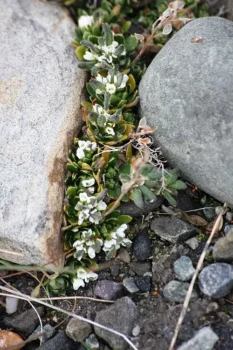
Arctic whitlowgrass is a small perennial forb that forms tight, cushion-like mats close to the ground. Despite its unassuming size, this little survivor packs a punch when it comes to cold tolerance. As a member of the mustard family, it produces clusters of tiny white, four-petaled flowers that bloom in late spring or early summer, creating delicate splashes of white against its compact rosettes of small, often fuzzy leaves.
Where Does It Call Home?
This hardy little plant is native to some of the coldest places on Earth, including Alaska and Greenland, along with other Arctic regions of North America. In the United States, you’ll find it growing wild in Alaska, where it thrives in the harsh conditions that would send most garden plants running for cover.
- Species observed
- No observations
The Reality Check: Should You Grow Arctic Whitlowgrass?
Here’s where we need to have an honest conversation. While arctic whitlowgrass is undeniably fascinating and ecologically valuable, it’s not your typical garden plant. This species has evolved specifically for Arctic conditions and requires:
- Extremely cold winter temperatures (USDA zones 1-4)
- A long winter chill period
- Cool, short growing seasons
- Excellent drainage and gravelly soils
- Full sun exposure
If you live in most temperate regions, arctic whitlowgrass will likely struggle or fail entirely in your climate. It’s simply not adapted for warmer conditions or longer growing seasons.
Who Might Want to Try Growing It?
Arctic whitlowgrass could be perfect for you if:
- You live in Alaska, northern Canada, or similar extreme cold climates
- You’re creating a specialized arctic or alpine plant collection
- You have a controlled environment like an alpine house or cold frame
- You’re involved in botanical research or conservation efforts
Growing Conditions and Care
If you’re determined to grow this arctic gem, here’s what it needs:
Climate: Arctic whitlowgrass requires genuinely cold conditions with long, frigid winters and cool, brief summers. It’s hardy to zone 1, making it one of the most cold-tolerant plants on the planet.
Soil: Provide extremely well-draining, gravelly or sandy soil. Think of the rocky, mineral-rich soils of the tundra. Heavy clay or moisture-retentive soils will likely kill this plant.
Light: Full sun is essential. In its native habitat, it receives intense but brief periods of sunlight during the short Arctic summer.
Water: While it needs some moisture during the growing season, excellent drainage is crucial. The plant cannot tolerate waterlogged conditions.
Wildlife and Pollinator Benefits
In its native range, arctic whitlowgrass serves as an important early nectar source for cold-adapted insects, including Arctic bees and flies. The plant’s early blooming period makes it particularly valuable when few other flowers are available in harsh Arctic conditions.
Better Alternatives for Most Gardens
Unless you live in an extremely cold climate, consider these native alternatives that offer similar aesthetic appeal but are more suitable for temperate gardens:
- Wild ginger for shaded ground cover
- Creeping phlox for sunny rock gardens
- Wild strawberry for low-growing ground cover with white flowers
- Saxifrages for alpine-style rock gardens
The Bottom Line
Arctic whitlowgrass is a remarkable plant that deserves our admiration and respect. However, it’s truly a specialist species that belongs in its native Arctic habitat or in the hands of experienced growers with appropriate facilities. For most gardeners, appreciating this plant means supporting Arctic conservation efforts and choosing more climate-appropriate native plants for our own landscapes.
If you do live in the far north and want to try growing arctic whitlowgrass, source your plants responsibly from reputable native plant nurseries, and be prepared for a gardening challenge that’s as demanding as it is rewarding.