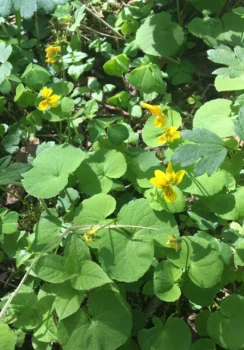
Arctic Yellow Violet: A Charming Native Groundcover for Cool Gardens
If you’re looking for a delicate, low-maintenance native plant that brings cheerful yellow blooms to shady spots, the arctic yellow violet (Viola biflora) might just be your new garden favorite. This petite perennial packs a lot of charm into its small stature, making it a wonderful addition to woodland gardens and naturalized landscapes across cooler regions of North America.
Meet the Arctic Yellow Violet
The arctic yellow violet is a hardy perennial forb – essentially a soft-stemmed herbaceous plant that lacks woody tissue above ground. Don’t let its delicate appearance fool you though; this little violet is tough enough to thrive in some pretty challenging conditions, from Alaska’s harsh climate to the high elevations of Colorado’s mountains.
As a native plant species, Viola biflora naturally occurs throughout Alaska, Canada, and parts of the lower 48 states. You’ll find it growing wild in places like British Columbia, Alaska, Colorado, and Yukon, where it has adapted to cool, moist conditions over thousands of years.
- Species observed
- No observations
Why You’ll Love This Little Violet
There are plenty of reasons to consider adding arctic yellow violet to your garden palette:
- Authentic native appeal: As a true native species, it supports local ecosystems and provides habitat for native wildlife
- Pollinator magnet: The small yellow flowers attract native bees and flies, supporting important pollinators in your garden
- Low maintenance: Once established, this violet pretty much takes care of itself
- Versatile groundcover: Forms attractive mats that work beautifully in woodland settings or rock gardens
- Cold hardy: Thrives in USDA hardiness zones 2-7, making it perfect for northern gardens
Garden Design Ideas
Arctic yellow violet shines brightest when used as a groundcover in naturalized settings. It’s particularly stunning in:
- Woodland gardens beneath trees and shrubs
- Rock gardens where it can nestle between stones
- Native plant gardens paired with other indigenous species
- Shaded areas where many other plants struggle
The plant’s heart-shaped leaves and bright yellow flowers create a lovely carpet effect, especially when planted in drifts rather than as isolated specimens.
Growing Conditions and Care
One of the best things about arctic yellow violet is how adaptable it is, especially considering its wetland status varies by region. In Alaska, it’s classified as a facultative wetland plant (usually found in wet areas), while in the Great Plains it’s simply facultative (equally happy in wet or dry conditions), and in Western mountain regions it again prefers wetland conditions.
Ideal growing conditions include:
- Partial to full shade
- Cool, moist, well-draining soil
- Organic-rich soil with good humus content
- Consistent moisture without waterlogging
- Protection from intense afternoon sun in warmer climates
Planting and Care Tips
Getting your arctic yellow violet established is refreshingly straightforward:
Planting: Spring or early fall are the best times to plant. Space plants about 6-8 inches apart if you want quick coverage, or let them naturally spread over time.
Watering: Keep soil consistently moist but not soggy, especially during the first growing season. Once established, the plant is quite drought-tolerant in cooler climates.
Maintenance: This is where arctic yellow violet really shines – it needs virtually no maintenance once established. It may self-seed in favorable conditions, gradually expanding its coverage area naturally.
Winter care: In its preferred hardiness zones, no special winter protection is needed. The plant goes dormant naturally and emerges fresh each spring.
Is Arctic Yellow Violet Right for Your Garden?
Arctic yellow violet is an excellent choice if you garden in cooler climates (zones 2-7) and have shady or partially shady areas that need groundcover. It’s particularly valuable for gardeners interested in supporting native ecosystems and local pollinators.
However, it might not be the best fit if you’re gardening in hot, southern climates or areas with intense, all-day sun exposure. The plant’s natural preference for cool, moist conditions means it may struggle in very warm or arid environments.
For those lucky enough to garden within its natural range, arctic yellow violet offers a perfect combination of beauty, ecological value, and ease of care – making it a wonderful addition to any native plant lover’s garden.