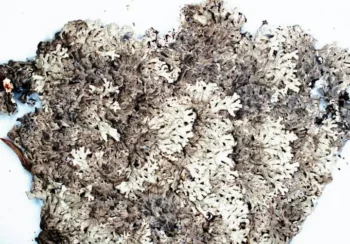
Arctoparmelia Lichen: The Fascinating Garden Visitor You Can’t Plant
Have you ever noticed those crusty, grayish-green patches growing on rocks, tree bark, or even old fence posts in your garden? You might be looking at arctoparmelia lichen (Arctoparmelia centrifuga), one of nature’s most remarkable partnerships that’s probably been quietly living in your landscape longer than you’ve been gardening there!
What Exactly Is Arctoparmelia Lichen?
Before we dive in, let’s clear up a common misconception: arctoparmelia lichen isn’t actually a plant at all! It’s a fascinating organism that’s part fungus, part algae (or sometimes cyanobacteria), living together in perfect harmony. Think of it as nature’s ultimate roommate situation – the fungus provides structure and protection, while the algae produces food through photosynthesis. Pretty cool, right?
This particular lichen goes by several scientific names throughout history, including Parmelia centrifuga and Xanthoparmelia centrifuga, but today we know it as Arctoparmelia centrifuga.
Where You’ll Find This Hardy Survivor
Arctoparmelia centrifuga is a true native species across North America, and you’ll actually find it throughout the northern regions of North America, Europe, and Asia. It’s what scientists call a circumpolar species – basically, it’s made itself at home all around the northern parts of our planet.
Spotting Arctoparmelia Lichen in Your Garden
Here’s how to identify this intriguing garden resident:
- Look for gray-green to yellowish-green crusty patches
- It has a foliose appearance, meaning it looks somewhat leafy or flaky
- You’ll typically find it growing on rocks, tree bark, soil, or other stable surfaces
- The patches can range from small spots to larger, more expansive colonies
- It tends to have a somewhat circular or spreading growth pattern
Is Arctoparmelia Lichen Good for Your Garden?
Absolutely! While you can’t plant or cultivate arctoparmelia lichen (trust us, many people have tried), having it naturally occur in your garden is actually a wonderful sign. Here’s why you should celebrate its presence:
- Air quality indicator: Lichens are incredibly sensitive to air pollution, so their presence suggests you have relatively clean air in your area
- Ecosystem health: They contribute to soil formation and provide habitat for tiny creatures
- Low maintenance: They require absolutely zero care from you – they’re completely self-sufficient
- Year-round interest: Unlike many plants, lichens provide subtle visual interest throughout all seasons
Why You Can’t Grow Arctoparmelia Lichen
Here’s where things get interesting (and perhaps a little disappointing for control-loving gardeners): you simply cannot plant, grow, or cultivate arctoparmelia lichen. These remarkable organisms require very specific environmental conditions that develop naturally over time. They need:
- Specific moisture levels that fluctuate naturally
- Clean air free from pollutants
- The right substrate that has developed the proper chemical and physical properties
- Time – sometimes decades – to establish properly
Creating Lichen-Friendly Conditions
While you can’t plant arctoparmelia lichen, you can create conditions that might encourage various lichens (including this one) to establish naturally in your landscape:
- Avoid using chemical pesticides and fertilizers near potential lichen habitat
- Leave some natural, undisturbed areas in your garden
- Maintain mature trees and natural rock features
- Be patient – lichen establishment is measured in years, not months
The Bottom Line
Arctoparmelia lichen is one of those special garden residents that you can appreciate but never control. If you’re lucky enough to have it naturally occurring in your landscape, consider it a badge of honor – you’re providing habitat for one of nature’s most successful partnerships. Instead of trying to grow it, simply enjoy observing this fascinating organism and take pride in maintaining the kind of healthy, balanced environment where it can thrive on its own terms.
Remember, the best gardens aren’t just about what we plant, but also about appreciating and protecting the incredible diversity of life that chooses to call our spaces home!