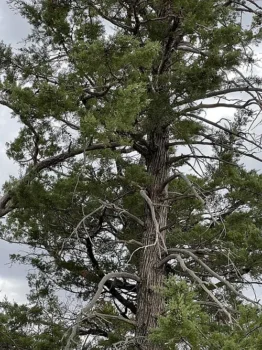
Arizona Cypress: A Drought-Tough Evergreen for Southwestern Gardens
If you’re dreaming of a stately evergreen that laughs in the face of drought and scorching southwestern sun, let me introduce you to the Arizona cypress (Hesperocyparis arizonica). This rugged native beauty might just be the perfect addition to your water-wise landscape – if you’ve got the space for it!
What Exactly Is Arizona Cypress?
Arizona cypress is a perennial evergreen tree that’s as tough as the desert mountains where it naturally grows. You might also find it listed under its older scientific names like Cupressus arizonica, but don’t let the name-changing fool you – it’s the same hardy tree that’s been thriving in the American Southwest for centuries.
This isn’t your typical backyard shrub. Arizona cypress is a single-stemmed tree that can reach an impressive 50 feet tall at maturity, though you’ll see it hit about 25 feet in its first 20 years with its moderate growth rate. Think of it as the strong, silent type of the evergreen world.
Where Does Arizona Cypress Call Home?
This native beauty naturally occurs across Arizona, California, Nevada, New Mexico, Texas, and Utah – basically, if you’re in the Southwest and there are mountains around, there’s a good chance Arizona cypress feels right at home. It’s also been introduced to Puerto Rico, where it’s adapted quite well to local conditions.
- Species observed
- No observations
Why You Might Fall in Love with Arizona Cypress
There’s something undeniably appealing about Arizona cypress that goes beyond its practical benefits:
- Striking appearance: The fine-textured, dense green foliage creates a beautiful backdrop year-round, and the tree becomes particularly eye-catching in fall
- Drought champion: Once established, this tree has high drought tolerance and low moisture needs – perfect for water-conscious gardeners
- Adaptable: It handles various soil types, from coarse to fine textures, and tolerates a wide pH range (6.1 to 7.9)
- Cold hardy: Can withstand temperatures down to -23°F, making it suitable for USDA hardiness zones 7-9
Is Arizona Cypress Right for Your Garden?
Before you fall head-over-heels for this southwestern stunner, consider whether you’re the right match:
Arizona cypress works best if you have:
- Plenty of space (remember, we’re talking 50 feet tall and wide at maturity!)
- A location in the southwestern United States where it’s native
- Well-draining soil and full sun exposure
- A preference for low-maintenance, drought-tolerant landscaping
- Need for a windbreak, privacy screen, or dramatic specimen tree
You might want to consider alternatives if:
- You have a small yard or limited space
- You’re looking for significant wildlife or pollinator benefits (this is wind-pollinated)
- You live outside its natural range and want to prioritize local natives
- You prefer faster-growing trees (moderate growth rate means patience is required)
Growing Arizona Cypress Successfully
The good news? Arizona cypress isn’t particularly fussy once you understand its needs:
Planting Tips
- Location: Choose a sunny spot with plenty of room for growth
- Soil: Any well-draining soil will do – it adapts to coarse, medium, or fine-textured soils
- Spacing: Plan for 300-1200 trees per acre if planting multiple specimens
- Timing: Plant in early spring or fall for best establishment
Care and Maintenance
- Watering: Water regularly the first year, then reduce to minimal supplemental watering
- Fertilizing: This tree has low fertility requirements – don’t overdo it
- Pruning: Minimal pruning needed; it naturally develops a good shape
- Mulching: A layer of mulch helps retain soil moisture and regulate temperature
Propagation and Availability
If you’re ready to add Arizona cypress to your landscape, you’re in luck – it’s routinely available from nurseries. You can propagate it from seeds (which are abundant), cuttings, or purchase container-grown or bare-root plants. Seeds require cold stratification, so if you’re starting from scratch, plan ahead!
The Bottom Line
Arizona cypress is a fantastic choice for southwestern gardeners who want a low-maintenance, drought-tolerant evergreen with serious presence. Just make sure you have the space for this gentle giant and the patience to let it reach its full potential. While it might not be the most exciting tree for pollinators, it’s an excellent foundation plant that provides year-round structure and beauty to water-wise landscapes.
If you’re outside the Southwest or working with limited space, consider researching native conifers specific to your region – every area has its own drought-tolerant evergreen champions waiting to be discovered!