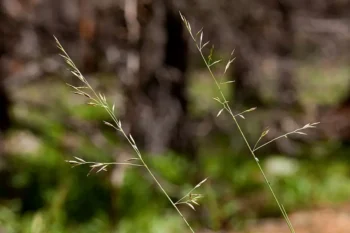
Arizona Fescue: A Hardy Native Grass for Southwestern Gardens
If you’re looking for a low-maintenance, drought-tolerant grass that’s perfectly at home in the American Southwest, meet Arizona fescue (Festuca arizonica). This unassuming but resilient native grass might just be the perfect addition to your xeric garden or naturalistic landscape.
What is Arizona Fescue?
Arizona fescue is a perennial bunch grass that forms attractive clumps of fine-textured, blue-green to gray-green foliage. Growing up to 2 feet tall, this slow-growing grass creates subtle texture and gentle movement in the landscape. Its growth form is naturally erect and compact, making it an excellent choice for gardeners who appreciate understated elegance.
Where Arizona Fescue Calls Home
This hardy native grass is indigenous to the southwestern United States, thriving naturally in Arizona, Colorado, Nevada, New Mexico, Texas, and Utah. You’ll typically find Arizona fescue growing in mountainous regions and high-elevation plateaus, from 4,000 to 10,000 feet in elevation, where it has adapted to challenging conditions including temperature extremes and limited rainfall.
- Species observed
- No observations
Why Choose Arizona Fescue for Your Garden?
There are several compelling reasons to consider Arizona fescue for your landscape:
- Native heritage: As a true native species, it supports local ecosystems and requires minimal resources once established
- Drought tolerance: With medium drought tolerance and low moisture requirements, it’s perfect for water-wise gardening
- Low maintenance: Slow growth rate means less mowing and trimming
- Wildlife value: Seeds provide food for birds and small mammals
- Erosion control: Excellent for stabilizing slopes and preventing soil erosion
- Cold hardy: Tolerates temperatures as low as -23°F (USDA zones 4-8)
Perfect Garden Companions and Landscape Uses
Arizona fescue shines in several landscape applications:
- Xeric gardens: Pairs beautifully with other drought-tolerant natives like desert marigold and penstemon
- Mountain gardens: Ideal for high-elevation landscapes where growing conditions can be challenging
- Naturalistic meadows: Creates authentic-looking native grass communities
- Restoration projects: Excellent choice for rehabilitating disturbed sites
- Slope stabilization: Helps prevent erosion on hillsides and embankments
Growing Conditions: What Arizona Fescue Loves
Arizona fescue is refreshingly undemanding, but it does have some preferences:
- Soil: Prefers fine-textured soils but adapts well to various soil types
- pH: Thrives in slightly acidic to neutral soils (pH 6.5-7.5)
- Sunlight: Full sun lover – shade intolerant
- Water: Low water needs once established (10-16 inches annual precipitation)
- Fertilizer: Low fertility requirements – often thrives in poor soils
- Drainage: Requires well-draining soil
Planting and Care Tips
Getting Arizona fescue established in your garden is straightforward:
- Timing: Plant seeds in late fall or early spring for best results
- Seeding rate: With 480,500 seeds per pound, a little goes a long way
- Establishment: Be patient – this grass has slow seedling vigor and establishment rate
- Watering: Provide regular water during establishment, then reduce significantly
- Maintenance: Minimal care needed once established – occasional removal of dead material in spring
- Propagation: Seed is the preferred method; plants are routinely available commercially
Seasonal Interest
While Arizona fescue won’t win any awards for flashy flowers, it offers subtle seasonal charm:
- Spring: Active growth period with fresh green foliage
- Late spring: Small yellow flowers appear (though not particularly showy)
- Summer: Brown seeds develop and provide food for wildlife
- Winter: Foliage becomes more porous, creating interesting texture
Is Arizona Fescue Right for Your Garden?
Arizona fescue is an excellent choice if you’re seeking a low-maintenance, drought-tolerant grass that supports native wildlife and fits naturally into southwestern landscapes. It’s particularly valuable for gardeners in mountainous or high-elevation areas where many ornamental grasses struggle.
However, this grass might not be the best fit if you’re looking for a traditional lawn substitute or need a fast-growing ground cover. Its slow growth and bunch-forming habit make it better suited for naturalistic plantings than formal landscapes.
With its understated beauty, remarkable hardiness, and authentic southwestern heritage, Arizona fescue proves that sometimes the most valuable garden additions are the ones that work quietly in the background, creating the perfect foundation for more showy native companions to shine.