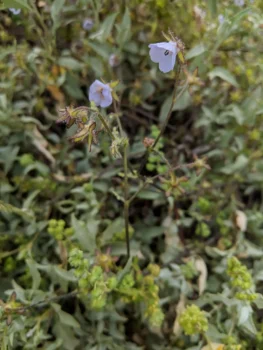
Arizona Fiestaflower: A Rare Southwestern Native Worth Knowing About
If you’re passionate about native plants and love discovering the hidden gems of the American Southwest, you might have stumbled across the Arizona fiestaflower (Pholistoma auritum var. arizonicum). This little-known annual wildflower represents one of those botanical treasures that most gardeners have never heard of—and there’s a good reason for that.
What Is Arizona Fiestaflower?
Arizona fiestaflower is an annual forb—basically a non-woody flowering plant that completes its entire life cycle in one growing season. As a member of the native flora of the lower 48 states, this plant belongs to a group of herbaceous wildflowers that lack the woody stems of shrubs and trees, instead producing soft, green stems that die back each year.
Where Does It Grow?
This southwestern native calls three states home: Arizona, California, and Nevada. Its natural range reflects the plant’s adaptation to the unique climate and soil conditions of the American Southwest.
- Species observed
- No observations
Should You Plant Arizona Fiestaflower?
Here’s where things get interesting—and a bit concerning. Arizona fiestaflower has a Global Conservation Status of S5T2T3, which indicates this plant may face some conservation challenges. This rarity status is something every responsible gardener should consider seriously.
If you’re determined to grow this particular native, here are the key things to keep in mind:
- Only source seeds or plants from reputable native plant nurseries that practice ethical collection
- Never collect seeds from wild populations
- Consider whether there might be more common native alternatives that could provide similar ecological benefits
- Understand that information about cultivation requirements is extremely limited
The Reality of Growing Rare Natives
Let’s be honest—Arizona fiestaflower falls into that category of plants that are more important for conservation than cultivation. With so little documented information about its growing requirements, care needs, or garden performance, it’s not exactly a beginner-friendly choice for native plant enthusiasts.
As an annual, it would need to be replanted each year (unless it self-seeds successfully), and without clear guidance on its preferred growing conditions, you’d essentially be experimenting in your garden.
Better Native Alternatives
If you’re drawn to the idea of growing southwestern native annuals, consider looking into more widely available and well-documented species from the same region. Many native plant nurseries can suggest annual wildflowers that are easier to grow, better understood horticulturally, and don’t carry the same conservation concerns.
The Bottom Line
Arizona fiestaflower represents the fascinating diversity of our native flora, but it’s probably not the best choice for most home gardens. If you’re committed to growing it, please ensure you’re sourcing it responsibly and consider supporting conservation efforts for rare native plants instead of—or in addition to—trying to cultivate them at home.
Sometimes the best way to appreciate a rare native plant is to support its conservation in the wild while choosing more readily available natives for our gardens.