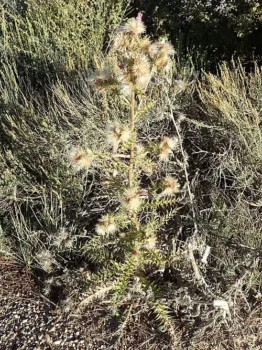
Arizona Thistle: A Spiky Native Beauty for Water-Wise Gardens
If you’re looking to add some wild beauty to your southwestern garden while supporting local wildlife, Arizona thistle (Cirsium arizonicum) might just be the prickly charmer you’ve been searching for. This native wildflower proves that sometimes the most unassuming plants pack the biggest punch when it comes to ecological value.
Meet the Arizona Thistle
Don’t let the word thistle scare you away! Arizona thistle is a legitimate native wildflower that belongs in southwestern landscapes. This herbaceous perennial (sometimes behaving as a biennial) is a true forb – meaning it’s a non-woody plant that dies back to the ground each year but returns from its roots.
Arizona thistle goes by the scientific name Cirsium arizonicum, and while it doesn’t have many other common names floating around, its botanical identity is well-established with several recognized synonyms in the scientific literature.
Where Arizona Thistle Calls Home
This resilient native has made itself at home across the American Southwest, naturally occurring in Arizona, California, Nevada, New Mexico, and Utah. It’s perfectly adapted to the challenging conditions of these arid and semi-arid regions, making it an excellent choice for gardeners who want to work with their local ecosystem rather than against it.
- Species observed
- No observations
Why Your Garden (and Local Wildlife) Will Love It
Arizona thistle isn’t just another pretty face – it’s a pollinator magnet! The purple to pink flower heads bloom from late spring through summer, providing a crucial nectar source for:
- Native bees and honey bees
- Butterflies, including painted ladies and skippers
- Beneficial insects that help control garden pests
- Hummingbirds, which occasionally visit the flowers
The plant typically reaches 2-4 feet in height with a somewhat sprawling form, making it perfect for naturalizing areas where you want that wild meadow look without the high maintenance.
Perfect Garden Settings
Arizona thistle shines brightest in:
- Xerophytic (drought-tolerant) gardens
- Native plant landscapes
- Wildlife habitat gardens
- Natural or meadow-style plantings
- Rocky slopes and challenging sites where other plants struggle
Its wetland status varies by region – it’s considered facultative upland in the Arid West (usually found in non-wetland areas) but facultative in the Great Plains and Western Mountains regions (equally at home in wet or dry conditions). This flexibility makes it adaptable to various moisture conditions in your garden.
Growing Arizona Thistle Successfully
The beauty of Arizona thistle lies in its low-maintenance nature. Here’s how to grow it successfully:
Hardiness: Thrives in USDA zones 4-9, making it suitable for a wide range of climates from cool mountain areas to hot desert regions.
Soil Requirements:
- Well-draining soil is essential
- Tolerates poor, rocky, or sandy soils
- Adapts to slightly alkaline conditions common in the Southwest
Light and Water:
- Full sun for best flowering
- Drought tolerant once established (usually after the first year)
- Minimal supplemental watering needed in most climates
Planting and Care Tips
Arizona thistle is refreshingly easy to establish:
- Direct seed in fall or early spring for best germination
- Lightly cover seeds and keep soil slightly moist until germination
- Space plants 2-3 feet apart to allow for mature spread
- Once established, it may self-seed in favorable conditions
- Deadhead spent flowers to prevent excessive self-seeding if desired
- Cut back stems in late fall or early spring
As a biennial-to-perennial plant, don’t be surprised if it takes a year to really get established. The wait is worth it when you see those first purple blooms attracting clouds of butterflies!
A Few Friendly Warnings
Like all thistles, Arizona thistle has spiny stems and leaves, so wear gloves when handling and place it away from high-traffic areas. The spines aren’t vicious, but they’ll definitely get your attention!
Also, while this plant can self-seed, it’s generally well-behaved and not considered invasive. However, if you’re concerned about it spreading, simply deadhead the flowers before they go to seed.
The Bottom Line
Arizona thistle is a fantastic choice for gardeners who want to support native wildlife while creating a low-maintenance, drought-tolerant landscape. It’s especially valuable in challenging sites where more pampered plants might struggle. Just remember to give it room to show off, respect those spines, and enjoy the parade of pollinators it will bring to your garden!