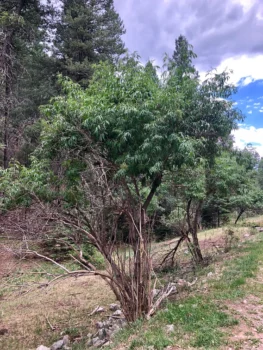
Arizona Walnut: A Magnificent Native Shade Tree for Southwestern Gardens
If you’re looking for a substantial native tree that can provide both shade and edible nuts in your Southwestern garden, the Arizona walnut (Juglans major) might just be your perfect match. This impressive deciduous tree brings the best of both worlds—ecological benefits and practical rewards—making it a standout choice for gardeners who have the space to accommodate its generous proportions.
What Makes Arizona Walnut Special
The Arizona walnut is a true native treasure, naturally occurring across Arizona, New Mexico, Oklahoma, Texas, and Utah. As a perennial tree species, it’s built to last, with a long lifespan that can span generations. Don’t let the slow growth rate fool you—this tree is worth the wait, eventually reaching an impressive 50 feet tall and about 20 feet in its first two decades.
- Species observed
- No observations
What really sets this tree apart is its dual personality when it comes to water needs. With a facultative wetland status, the Arizona walnut is remarkably adaptable—it can thrive in both wetland and non-wetland conditions, making it more versatile than many desert natives.
Garden Appeal and Landscape Role
This isn’t just any old tree—the Arizona walnut brings serious aesthetic appeal to your landscape. Its coarse-textured, yellow-green foliage creates a bold statement during the growing season, while fall brings a spectacular show of yellow leaves that are genuinely conspicuous. The brown flowers might not be showstoppers, but the brown fruits (those coveted walnuts!) certainly are.
In landscape design, think of the Arizona walnut as your anchor tree—the kind of substantial specimen that defines a space and provides structure. It works beautifully in:
- Native plant gardens where authenticity matters
- Xeriscape designs that need a substantial shade element
- Edible landscapes for the nut-loving gardener
- Large properties where a single-stem, erect tree can really shine
Growing Conditions: What This Tree Craves
The Arizona walnut has some specific preferences, but they’re not unreasonable. Here’s what will make your tree happiest:
Soil: It loves coarse to medium-textured soils but turns its nose up at fine, clay-heavy ground. Keep the pH between 6.0 and 7.0—slightly acidic to neutral is the sweet spot.
Water: Medium drought tolerance means you’ll need to provide moderate moisture, especially during establishment. This tree needs between 25-80 inches of precipitation annually, so supplemental irrigation is often necessary in arid regions.
Sun and Space: Full sun is non-negotiable—this tree is shade intolerant. It also needs room to spread, so plan for its mature size from the start.
Climate: Hardy in USDA zones 6-9, it can handle temperatures down to -33°F but needs at least 105 frost-free days to thrive.
Planting and Care Tips
Getting your Arizona walnut off to a good start requires some patience and planning. Here’s your roadmap to success:
Propagation: You can start from seed (about 90 seeds per pound), but cold stratification is required—nature’s way of ensuring spring germination. Container plants or bare root specimens are also viable options, though commercial availability is limited to contracting only.
Planting: Plan for 100-800 trees per acre if you’re thinking large scale, but for home gardens, one specimen is usually plenty. Remember that root depth reaches at least 40 inches, so avoid planting over utility lines.
Maintenance: The good news? This tree has excellent resprout ability and coppice potential, meaning it can recover from damage. However, it offers no fire tolerance, so keep that in mind in fire-prone areas.
Wildlife and Pollinator Benefits
While we don’t have complete data on specific wildlife benefits, walnut trees are generally excellent habitat providers. The nuts feed various wildlife species, and the substantial canopy offers nesting sites and shelter. As a wind-pollinated species, it doesn’t specifically cater to pollinators, but it contributes to the overall ecosystem health of your garden.
A Few Considerations
Before you fall completely in love, there are a couple of things to keep in mind. The Arizona walnut is known to be allelopathic—meaning it can inhibit the growth of some other plants nearby. This is actually common in walnut family trees, so just plan your companion plantings accordingly.
Also, with a slight toxicity rating, it’s worth noting that like other walnuts, some parts of the tree may be mildly toxic to certain animals, though the nuts themselves are edible for humans.
The Bottom Line
The Arizona walnut is a tree for gardeners who think big and plan for the future. If you have the space, patience, and appropriate growing conditions, this native beauty will reward you with decades of shade, fall color, and homegrown nuts. It’s not a tree for every garden, but for the right situation, it’s absolutely spectacular.
Just remember: this is a commitment tree. Plant it where you want substantial presence for generations to come, and give it the room and respect it deserves. Your future self—and the local wildlife—will thank you for it.