Armenia Tephromela Lichen: A Fascinating Natural Addition to Your Garden’s Rocky Features
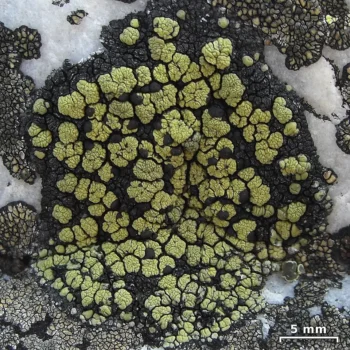
If you’ve ever noticed crusty, whitish patches growing on rocks in your garden or local hiking trails, you might have encountered the Armenia tephromela lichen (Tephromela armeniaca). This fascinating organism isn’t actually a plant at all – it’s a lichen, which makes it a unique partnership between fungi and algae working together in perfect harmony.
What Exactly Is Armenia Tephromela Lichen?
Don’t let the scientific name intimidate you! Armenia tephromela lichen is a type of crustose lichen, which means it forms a crusty layer that’s tightly attached to its substrate – usually rocks. You might also see it referred to by its synonym, Lecidea armeniaca. Think of lichens as nature’s ultimate roommate situation: the fungal partner provides structure and protection, while the algae partner creates food through photosynthesis.
This particular lichen is native to North America and plays an important role in natural ecosystems, even if it doesn’t steal the show like colorful wildflowers might.
Where You’ll Find This Rocky Resident
Armenia tephromela lichen has made itself at home across western North America, particularly thriving in arid and semi-arid regions where many other organisms struggle to survive. It’s perfectly adapted to harsh conditions that would make most garden plants throw in the trowel.
Identifying Armenia Tephromela Lichen
Spotting this lichen is like playing nature’s version of Where’s Waldo, but once you know what to look for, it becomes much easier:
- Look for whitish to pale gray crusty patches on rock surfaces
- The patches appear tightly bonded to the rock, almost like natural paint
- Surface texture is typically rough and crusty rather than smooth
- Most commonly found on exposed rock faces in dry environments
Is This Lichen Beneficial for Your Garden?
While you can’t exactly plant Armenia tephromela lichen like you would a tomato, it can be surprisingly beneficial if it shows up naturally in your garden:
- Acts as a natural air quality indicator – lichens are sensitive to pollution
- Helps with slow rock weathering and soil formation over time
- Adds subtle natural character to rock gardens and stone features
- Requires zero maintenance once established
- Provides habitat for tiny invertebrates
Creating Conditions for Natural Colonization
You can’t plant lichens like traditional garden plants, but you can create conditions that might encourage natural colonization:
- Include natural stone features in your landscape design
- Ensure good air circulation around rocky areas
- Avoid using chemical treatments on or near stone surfaces
- Be patient – lichen establishment can take years
The Bottom Line
Armenia tephromela lichen won’t win any Most Beautiful Garden Plant contests, but it represents something special: a hardy, native organism that asks for nothing and gives back to the ecosystem in quiet ways. If you spot these crusty patches on rocks in your garden, consider yourself lucky to host one of nature’s most successful partnerships.
Rather than trying to remove them, embrace these subtle signs of a healthy environment. After all, any organism that can thrive in harsh conditions while improving air quality and asking for absolutely zero care deserves a little respect in our gardens!