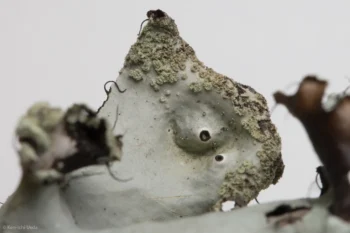
Arnold’s Parmotrema Lichen: A Natural Air Quality Indicator in Your Garden
Have you ever noticed those flat, leaf-like growths adorning the bark of mature trees in your yard? If you’re lucky enough to spot grayish-green, rosette-shaped patches that look almost like nature’s own botanical art, you might be looking at Arnold’s parmotrema lichen (Parmotrema arnoldii). This fascinating organism is more than just a pretty face – it’s actually a living air quality monitor right in your own backyard!
What Exactly Is Arnold’s Parmotrema Lichen?
First things first – Arnold’s parmotrema lichen isn’t actually a plant in the traditional sense. It’s a lichen, which is a remarkable partnership between a fungus and an algae (or sometimes a cyanobacterium). Think of it as nature’s ultimate roommate situation, where both partners benefit from living together. The fungus provides structure and protection, while the algae produces food through photosynthesis.
This native North American species goes by the scientific name Parmotrema arnoldii, though you might also see it referenced by its synonym Parmelia arnoldii Du Rietz in older field guides. It’s part of the fascinating world of foliose lichens – those are the ones that look like leafy, flat growths rather than crusty patches or tiny shrub-like forms.
Where You’ll Find This Natural Wonder
Arnold’s parmotrema lichen calls eastern North America home, thriving in temperate deciduous forests where the air is clean and the humidity levels are just right. You’ll typically spot it growing on the bark of mature hardwood trees, where it forms those distinctive rosette-like patterns that can span several inches across.
What Does It Look Like?
Identifying Arnold’s parmotrema lichen is like becoming a nature detective! Here’s what to look for:
- Grayish-green to bluish-gray coloration that can vary depending on moisture levels
- Flat, leaf-like lobes that radiate outward from a central point, creating rosette patterns
- Smooth or slightly wrinkled surface texture
- Typically grows directly on tree bark, particularly on the north or shaded sides of trees
- Can form patches ranging from a few inches to over a foot in diameter
Is It Beneficial to Your Garden?
Absolutely! While you can’t plant or cultivate Arnold’s parmotrema lichen (it appears naturally when conditions are right), having it in your garden is actually a wonderful sign. Here’s why you should celebrate if you spot it:
Air Quality Indicator: Lichens are incredibly sensitive to air pollution, particularly sulfur dioxide and nitrogen compounds. If Arnold’s parmotrema lichen is thriving in your area, it’s essentially giving you a green thumbs-up that your local air quality is pretty good!
Ecosystem Health: The presence of diverse lichen species indicates a healthy, balanced ecosystem. While Arnold’s parmotrema lichen doesn’t provide nectar for pollinators (since it doesn’t flower), it does contribute to the overall biodiversity of your garden environment.
Natural Beauty: These lichens add subtle, understated beauty to mature trees, creating natural patterns and textures that complement woodland garden aesthetics perfectly.
Supporting Lichen Growth in Your Landscape
While you can’t plant lichens like you would a flower or shrub, you can create conditions that encourage their natural appearance:
- Maintain mature trees, especially native hardwoods
- Avoid using harsh chemicals or pesticides that could impact air quality
- Preserve areas of partial shade where humidity levels remain relatively stable
- Be patient – lichens grow very slowly, sometimes taking years to establish visible colonies
A Living Testament to Clean Air
Arnold’s parmotrema lichen serves as a gentle reminder that some of the most beautiful and important aspects of our gardens can’t be bought at a nursery or planted with a trowel. Instead, they appear naturally when we create and maintain healthy environments. If you’re fortunate enough to have this species gracing your trees, take a moment to appreciate not just its quiet beauty, but what its presence says about the health of your local environment.
Next time you’re walking through your garden or a nearby wooded area, take a closer look at those tree trunks. You might just discover you have your very own air quality monitoring system, courtesy of one of nature’s most fascinating partnerships!