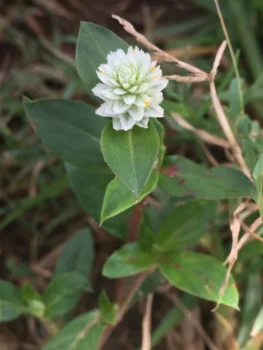
Arrasa Con Todo: The Resilient Globe Amaranth That’s Making Waves
If you’ve ever stumbled across a cheerful little plant with globe-shaped flowers that seems to thrive where others struggle, you might have met arrasa con todo (Gomphrena serrata). This charming member of the amaranth family has quite the personality – it’s tough as nails and spreads with enthusiasm, which explains its dramatic common name that translates to destroys everything in Spanish.
What Exactly Is Arrasa Con Todo?
Arrasa con todo is a forb – basically a non-woody flowering plant that stays relatively low to the ground. Unlike shrubs or trees, it doesn’t develop thick, woody stems but instead maintains soft, herbaceous growth throughout its life. This little powerhouse can behave as either an annual or perennial depending on your climate and growing conditions.
The plant produces small, rounded flower heads that look like tiny pom-poms, typically in shades of pink to purple. These globe-shaped blooms are where it gets its family connection to globe amaranth, and they’re quite the showstoppers when they appear in clusters across the plant.
Where Does It Call Home?
Here’s where things get interesting with arrasa con todo’s geography. This plant has a complex relationship with different regions. It’s actually native to parts of the southeastern United States, including Florida, Georgia, Louisiana, Maryland, Texas, and Virginia. It’s also native to Puerto Rico. However, it’s considered non-native in Hawaii and the U.S. Virgin Islands, where it has established itself and reproduces without human assistance.
- Species observed
- No observations
Should You Grow Arrasa Con Todo?
The answer depends on where you live and what you’re trying to achieve in your garden. If you’re in an area where it’s native, arrasa con todo can be a fantastic addition to naturalized areas, wildflower gardens, or informal landscapes. It’s particularly well-suited for:
- Coastal gardens where salt tolerance is important
- Areas with poor or sandy soil
- Drought-prone locations
- Informal or naturalized garden designs
However, given its enthusiastic spreading nature and the fact that it can establish readily in new areas, gardeners should be mindful of its potential to move beyond intended boundaries.
Growing Conditions and Care
One of arrasa con todo’s greatest strengths is its adaptability. This plant thrives in USDA hardiness zones 8-11 and prefers:
- Sunlight: Full sun for best flowering and compact growth
- Soil: Well-draining soil; tolerates poor, sandy, or rocky conditions
- Water: Drought tolerant once established; minimal watering needed
- Maintenance: Very low maintenance once established
In Hawaii, arrasa con todo has shown it can handle both wetland and non-wetland conditions, demonstrating its remarkable adaptability to different moisture levels.
Planting and Care Tips
Getting arrasa con todo established is refreshingly straightforward:
- Plant in spring after the last frost in cooler zones
- Space plants appropriately as they will spread naturally
- Water regularly during establishment, then reduce frequency
- Little to no fertilization needed – this plant thrives on neglect
- Deadhead spent flowers if you want to prevent self-seeding
Wildlife and Pollinator Benefits
The small, colorful flowers of arrasa con todo attract butterflies and other small pollinators, making it a valuable addition to pollinator-friendly gardens. The extended blooming period provides nectar sources when many other plants have finished flowering.
Consider Native Alternatives
If you’re gardening in areas where arrasa con todo isn’t native, consider exploring indigenous alternatives that provide similar benefits. Your local native plant society or extension office can recommend regional species that offer comparable drought tolerance, pollinator attraction, and low-maintenance appeal while supporting local ecosystems.
The Bottom Line
Arrasa con todo is a resilient, adaptable plant that can thrive in challenging conditions where other plants might struggle. While its spreading nature means it’s not for every garden situation, it can be an excellent choice for naturalized areas, coastal gardens, and low-water landscapes. Just remember that with great adaptability comes great responsibility – keep an eye on its spread and be mindful of your local ecosystem.
Whether you choose to grow arrasa con todo or explore native alternatives, the key is finding plants that work harmoniously with your local environment while providing the beauty and functionality you desire in your garden space.