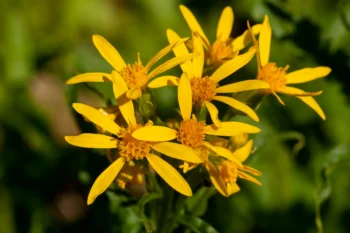
Arrowleaf Ragwort: A Bright Native Wildflower for Wet Spots
If you’ve got a soggy corner of your garden that you’re not sure what to do with, let me introduce you to a cheerful native that actually loves wet feet. Arrowleaf ragwort (Senecio triangularis) is one of those delightful wildflowers that thrives where many other plants would throw in the towel and sulk.
What Makes Arrowleaf Ragwort Special?
This perennial herb gets its common name from its distinctive triangular leaves that look remarkably like arrowheads. But the real show-stopper is its explosion of bright yellow, daisy-like flowers that appear in dense, flat-topped clusters during mid to late summer. Standing 2-4 feet tall, this native beauty creates quite the statement when it’s in full bloom.
The plant spreads slowly through underground rhizomes, forming nice colonies over time without being aggressive about it. Think of it as the polite cousin in the plant world – it’ll expand its territory, but won’t bulldoze the neighbors.
Where Does It Come From?
Arrowleaf ragwort is a true western North American native, naturally found from Alaska all the way down to New Mexico. You’ll encounter it growing wild in states and provinces including Alberta, British Columbia, Alaska, California, Colorado, Idaho, Montana, Nevada, Oregon, Utah, Washington, and Wyoming. It’s particularly fond of mountain meadows, streambanks, and wetland edges.
- Species observed
- No observations
Why Your Garden (and Local Wildlife) Will Love It
Here’s where this plant really shines – it’s like opening a diner for pollinators. The abundant yellow flowers are magnets for bees, butterflies, and other beneficial insects. The dense flower clusters provide an excellent landing platform and plenty of nectar to keep your garden’s pollinator population happy and well-fed.
From a design perspective, arrowleaf ragwort brings wonderful vertical structure to naturalized areas and provides that coveted bright summer color when many other plants are starting to look tired from the heat.
Perfect Garden Spots for Arrowleaf Ragwort
This plant is ideal for:
- Rain gardens – It actually appreciates all that extra water
- Bog or wetland gardens – Right at home with consistently moist conditions
- Native plant landscapes – Authentic to western North American ecosystems
- Naturalized areas – Looks perfectly at home in wild, informal settings
- Mountain or alpine-style gardens – Mimics its natural high-elevation habitat
Growing Conditions That Make It Thrive
Arrowleaf ragwort has some specific preferences, but they’re pretty straightforward once you know what it wants:
Moisture: This is the big one – it needs consistently moist to wet soil. Think of it as the opposite of those drought-tolerant plants everyone talks about. If your soil dries out regularly, this isn’t your plant.
Light: It’s quite flexible here, doing well in full sun to partial shade. In hotter climates, some afternoon shade will keep it happier.
Soil: Prefers medium to fine-textured soils with good organic content. It’s not picky about pH, tolerating anywhere from 6.2 to 7.8, but appreciates fertile conditions.
Climate: Hardy in USDA zones 3-8, this plant can handle serious cold (down to -33°F!) but needs at least 145 frost-free days to complete its growing cycle.
Planting and Care Tips
Getting Started: Seeds are your best bet for propagation, and they’re readily available commercially. Spring planting works well, and with 500,000 seeds per pound, a little goes a long way!
Ongoing Care: Once established, arrowleaf ragwort is relatively low-maintenance. Keep the soil consistently moist (mulching helps), and consider dividing clumps every 3-4 years to prevent overcrowding. Deadheading spent flowers can extend the blooming period if you’re so inclined.
Be Patient: This plant has a moderate growth rate and what’s described as slow regrowth after disturbance, so don’t expect instant gratification. Good things take time!
A Few Things to Keep in Mind
While arrowleaf ragwort is generally well-behaved, it’s worth noting that like many plants in the Senecio family, it can contain compounds that may be harmful if consumed in large quantities. This is rarely an issue in garden settings, but it’s good to be aware of if you have curious pets or livestock.
The plant isn’t fire-resistant, so if you’re in a wildfire-prone area, consider its placement carefully in your defensible space planning.
The Bottom Line
If you’ve been struggling with what to plant in those perpetually moist spots in your garden, arrowleaf ragwort might just be your new best friend. It’s native, supports pollinators, provides gorgeous summer color, and actually wants to grow where the ground stays soggy. Sometimes the best plants are the ones that work with your garden’s natural conditions rather than fighting against them.
Just remember: wet feet good, dry feet bad. Keep that simple rule in mind, and you’ll have a thriving colony of these cheerful yellow beauties lighting up your landscape for years to come.