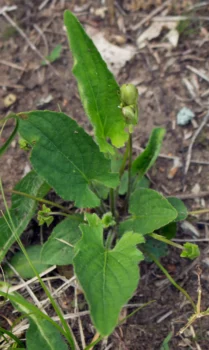
Arrowleaf Violet: A Charming Native Ground Cover for Your Garden
If you’re looking for a delightful native ground cover that brings both beauty and ecological value to your landscape, meet the arrowleaf violet (Viola sagittata). This charming little perennial might just become your new favorite addition to shaded garden spots and naturalized areas.
What Makes Arrowleaf Violet Special?
The arrowleaf violet is a native North American treasure that’s been quietly beautifying woodlands and meadows long before we started planning our garden spaces. As a true native species, it’s perfectly adapted to work harmoniously with local ecosystems while providing year-round interest in your landscape.
This herbaceous perennial gets its name from its distinctively shaped leaves, which range from heart-shaped to arrow-like. In spring, it produces lovely small violet flowers that seem to dance above the foliage, creating a carpet of purple that’s simply enchanting.
Where Does Arrowleaf Violet Call Home?
This adaptable native has an impressive range, naturally occurring across much of eastern North America. You’ll find it thriving from southeastern Canada down to the Gulf Coast states, and stretching west into the Great Plains. Specifically, arrowleaf violet grows in Alabama, Arkansas, Connecticut, Delaware, Georgia, Illinois, Indiana, Iowa, Kansas, Kentucky, Louisiana, Maine, Maryland, Massachusetts, Michigan, Minnesota, Mississippi, Missouri, New Hampshire, New Jersey, New York, North Carolina, Ohio, Oklahoma, Pennsylvania, Rhode Island, South Carolina, Tennessee, Texas, Vermont, Virginia, West Virginia, and Wisconsin, plus several Canadian provinces including New Brunswick, Nova Scotia, Ontario, Prince Edward Island, and Quebec.
- Species observed
- No observations
Why Your Garden (and Local Wildlife) Will Love It
Arrowleaf violet isn’t just a pretty face – it’s a hardworking member of any native plant community. Here’s why it deserves a spot in your landscape:
- Excellent ground cover that helps suppress weeds naturally
- Attracts native bees, butterflies, and other beneficial pollinators
- Serves as a host plant for fritillary butterfly caterpillars
- Provides early spring nectar when few other flowers are blooming
- Extremely low maintenance once established
- Adaptable to various growing conditions
Perfect Garden Spots for Arrowleaf Violet
This versatile native shines in several garden settings:
- Woodland gardens: Perfect for naturalizing under trees and larger shrubs
- Shade gardens: Brightens up those tricky darker spots with cheerful spring blooms
- Native plant gardens: An authentic addition to any regionally appropriate plant palette
- Pollinator gardens: Provides crucial early season resources for beneficial insects
- Naturalized landscapes: Helps create that effortless, wild look
Growing Conditions: Surprisingly Adaptable
One of the best things about arrowleaf violet is its flexibility. While many native plants can be finicky, this little violet is refreshingly easygoing:
- Light: Partial shade to full sun (though it appreciates some afternoon shade in hotter climates)
- Soil: Adaptable to various soil types, from sandy to clay
- Moisture: Prefers consistent moisture but tolerates some drought once established
- Hardiness: Thrives in USDA zones 3-8
Interestingly, arrowleaf violet has different wetland preferences depending on your region. In coastal areas, it leans more toward wetland conditions, while in other regions, it’s equally happy in both wet and dry spots. This adaptability makes it a reliable choice for various garden situations.
Planting and Care Tips for Success
Getting arrowleaf violet established in your garden is wonderfully straightforward:
- Timing: Plant in spring or fall for best establishment
- Spacing: Allow 6-12 inches between plants – they’ll fill in naturally over time
- Watering: Keep consistently moist the first season, then reduce as plants establish
- Fertilizing: Generally unnecessary – native soil is usually perfect
- Maintenance: Minimal! Simply remove any unwanted seedlings if it spreads too enthusiastically
Fair warning: arrowleaf violet is a bit of a wanderer. It self-seeds readily and can spread via underground rhizomes, so it may pop up in unexpected places. Most gardeners consider this a feature, not a bug, but keep it in mind if you prefer more controlled plantings.
Is Arrowleaf Violet Right for Your Garden?
This native violet is an excellent choice if you’re looking to:
- Support local wildlife and pollinators
- Create low-maintenance ground cover
- Add authentic native plants to your landscape
- Enjoy early spring flowers
- Fill challenging partial shade areas
However, you might want to consider alternatives if you need a perfectly contained, non-spreading plant or if you’re gardening in extremely dry conditions without supplemental water.
With its combination of ecological benefits, charming appearance, and easy-care nature, arrowleaf violet proves that some of the best garden plants have been right under our noses all along. Give this native beauty a try, and watch your garden come alive with both color and beneficial wildlife activity!