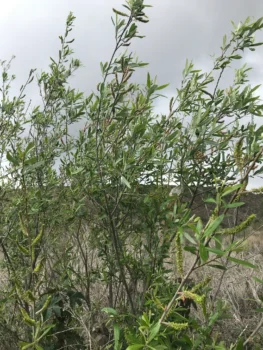
Arroyo Willow: The Perfect Native Shrub for Western Water-Wise Gardens
If you’re looking for a tough, beautiful native shrub that can handle whatever Mother Nature throws at it, let me introduce you to the arroyo willow (Salix lasiolepis). This unsung hero of western landscapes deserves a spot in more gardens, and I’m here to tell you why!
Meet the Arroyo Willow
The arroyo willow is a perennial shrub that’s as resilient as it is graceful. Growing typically 6-15 feet tall with multiple stems arising from the ground, this native beauty creates an lovely, somewhat weeping form that adds movement and texture to any landscape. Its narrow, silvery-green leaves shimmer in the breeze, while its smooth bark provides year-round interest.
Where Does It Call Home?
This fantastic native plant naturally occurs across nine western states: Arizona, California, Idaho, Nevada, New Mexico, Oregon, Texas, Utah, and Washington. From coastal areas to inland valleys and even up into the mountains, arroyo willow has adapted to a wide range of conditions throughout the American West.
- Species observed
- No observations
Why Your Garden (and Local Wildlife) Will Love It
Here’s where arroyo willow really shines as a garden plant:
- Early pollinator magnet: Those cheerful yellow-green catkins that appear in early spring are like opening a breakfast buffet for bees and other pollinators when little else is blooming
- Wildlife haven: Birds love nesting in its branching structure, and many species depend on willows for food
- Erosion fighter: Its extensive root system makes it perfect for slopes and areas prone to erosion
- Water-wise beauty: Once established, it’s remarkably drought tolerant
- Low maintenance: This is definitely a plant it and forget it kind of shrub
Perfect Garden Roles
Arroyo willow fits beautifully into several garden styles:
- Native plant gardens where you want authentic regional character
- Naturalistic landscapes that mimic wild spaces
- Wildlife gardens focused on supporting local ecosystems
- Water-wise xeriscaping projects
- Riparian or dry creek bed themed areas
Growing Conditions: What Makes It Happy
One of the best things about arroyo willow is how adaptable it is. Here’s what it prefers:
- Sunlight: Full sun to partial shade (though it flowers best with good sun exposure)
- Soil: Not picky! Tolerates everything from sandy to clay soils
- Water: Facultative wetland status means it’s happy near water sources but doesn’t require them
- Climate zones: Hardy in USDA zones 7-10
Planting and Care Tips
Getting your arroyo willow established is refreshingly straightforward:
- When to plant: Fall or early spring for best establishment
- Spacing: Give it 8-12 feet of space to spread naturally
- First year watering: Water regularly to establish roots, then back off
- Pruning: Minimal pruning needed – just remove dead or damaged branches
- Fertilizing: None needed – it’s adapted to natural soil conditions
A Few Things to Keep in Mind
Like any plant, arroyo willow isn’t perfect for every situation. It can spread via underground stems, so give it room to naturalize or plan to contain it if space is limited. Also, if you’re hoping for a formal, manicured look, this free-spirited native might not be your best choice.
The Bottom Line
Arroyo willow is one of those wonderful native plants that gives you maximum impact with minimum effort. It supports local wildlife, handles drought like a champ once established, and brings authentic regional character to your landscape. Plus, there’s something deeply satisfying about growing a plant that has been thriving in your area for thousands of years – long before any of us showed up with our garden hoses and fertilizers!
If you’re ready to embrace lower-maintenance, wildlife-friendly gardening with a distinctly western flair, arroyo willow might just be the perfect addition to your landscape palette.