Arthrorhaphis Lichen: A Tiny But Mighty Garden Ally You Probably Haven’t Noticed
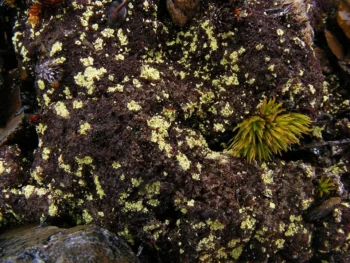
If you’ve ever taken a close look at the bark of trees in your yard or local park, you might have spotted tiny, crusty patches that look like someone sprinkled yellowish-green powder on the surface. Meet the arthrorhaphis lichen (Arthrorhaphis citrinella), a fascinating organism that’s quietly doing important work in North American ecosystems – including possibly your own backyard!
What Exactly Is Arthrorhaphis Lichen?
Here’s where things get interesting: arthrorhaphis lichen isn’t actually a plant at all! It’s what scientists call a composite organism – essentially a partnership between a fungus and an algae that decided to team up and live together. This tag-team approach has worked so well that lichens like Arthrorhaphis citrinella have been thriving across North America for thousands of years.
You might also see this species referred to by its older scientific names, Bacidia citrinella or Bacidia flavovirescens, but don’t let the name changes confuse you – it’s the same remarkable organism.
Where You’ll Find This Lichen
Arthrorhaphis citrinella is native to North America and can be found in various regions across the continent. It’s particularly fond of setting up shop on the bark of deciduous trees, where it forms small, crusty colonies that blend seamlessly into the tree’s natural texture.
What Does It Look Like?
Identifying arthrorhaphis lichen is easier than you might think once you know what to look for:
- Small, crusty patches that appear almost powdery or granular
- Yellowish-green to pale green coloration
- Grows directly on tree bark, particularly on deciduous trees
- Forms irregular, spreading colonies that can range from tiny spots to larger patches
- Has a somewhat rough, textured surface rather than smooth or leafy appearance
Is Arthrorhaphis Lichen Good for Your Garden?
Absolutely! While you can’t exactly plant arthrorhaphis lichen like you would a flower or shrub, its presence in your garden is actually a wonderful sign. Here’s why you should be happy to see it:
Air Quality Indicator: Lichens are incredibly sensitive to air pollution, so finding arthrorhaphis lichen in your area means you’ve got relatively clean air – a win for both you and your plants!
Ecosystem Health: These lichens contribute to the overall biodiversity of your garden ecosystem. They provide microhabitat for tiny insects and other small creatures, adding another layer to your garden’s food web.
Natural Beauty: Once you start noticing lichens, you’ll appreciate the subtle beauty they add to tree bark and wooden surfaces. They create natural patterns and textures that complement any garden aesthetic.
Supporting Lichen Communities in Your Garden
While you can’t actively cultivate arthrorhaphis lichen, you can create conditions that welcome it and other beneficial lichens:
- Maintain mature trees with interesting bark textures
- Avoid using harsh chemicals or fungicides that might harm lichen communities
- Keep your garden pesticide-free when possible
- Allow some dead wood to remain in your landscape (where safe and appropriate)
- Support clean air initiatives in your community
The Bottom Line
Arthrorhaphis lichen might be small and easy to overlook, but it’s a valuable member of North America’s native species community. If you spot these yellowish-green crusty patches on your trees, take a moment to appreciate this remarkable organism that’s been quietly contributing to healthy ecosystems for millennia. It’s proof that sometimes the most important garden inhabitants are the ones we never think to plant ourselves!
So next time you’re walking through your garden, take a closer look at your tree bark. You might just discover you’ve been hosting these fascinating native organisms all along – and that’s definitely something to celebrate.