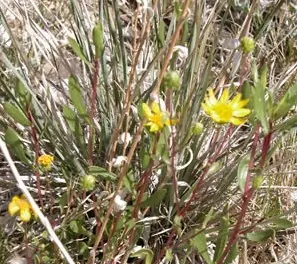
Ash Meadows Gumweed: A Rare Desert Jewel Worth Protecting
Meet Ash Meadows gumweed (Grindelia fraxinopratensis), a fascinating perennial wildflower that’s as rare as it is beautiful. This little-known native gem represents one of nature’s most specialized success stories, thriving in a unique corner of the American Southwest where few plants dare to grow.
What Makes Ash Meadows Gumweed Special
This charming forb belongs to the sunflower family and produces cheerful yellow daisy-like blooms that might remind you of its more common gumweed cousins. But don’t let its familiar appearance fool you – this plant is anything but ordinary. As a perennial herb, it returns year after year, slowly building sustainable populations in its specialized habitat.
The plant gets its gumweed name from the characteristic sticky, resinous bracts that surround its flower heads – a trait shared with other Grindelia species that helps protect the developing flowers from insects and harsh conditions.
Where It Calls Home
Ash Meadows gumweed has one of the most restricted ranges of any North American wildflower, growing naturally only in California and Nevada. This highly specialized plant is endemic to the unique alkaline wetland systems of the Mojave Desert region, where underground springs create oasis-like conditions in an otherwise arid landscape.
- Species observed
- No observations
A Plant in Need of Protection
Important Conservation Note: Before we dive into growing tips, it’s crucial to understand that Ash Meadows gumweed is listed as Threatened and has a Global Conservation Status of S2 (Imperiled). This means it’s extremely rare, with typically only 6 to 20 known populations and fewer than 3,000 individual plants in the wild.
If you’re interested in growing this remarkable plant, please only use responsibly sourced material from reputable native plant nurseries that propagate from legally collected seeds – never collect from wild populations.
Growing Conditions: Recreating a Desert Oasis
Successfully growing Ash Meadows gumweed means understanding its unique preferences. This isn’t your typical drought-tolerant desert plant – it’s actually a facultative wetland species that thrives in consistently moist conditions.
Key growing requirements:
- Full sun exposure
- Alkaline, mineral-rich soils
- Consistent moisture (not drought-tolerant despite its desert origins)
- Good drainage to prevent waterlogging
- USDA hardiness zones 8-10
Garden Role and Design Ideas
While this plant isn’t suitable for typical home landscapes due to its specialized needs and conservation status, it can play an important role in:
- Conservation gardens focused on rare species preservation
- Educational native plant collections
- Specialized wetland restoration projects
- Research and botanical garden settings
Wildlife and Pollinator Benefits
Like other members of the sunflower family, Ash Meadows gumweed likely provides valuable nectar and pollen for native bees, butterflies, and other pollinators. Its late-season blooms can be particularly important for wildlife preparing for winter in harsh desert environments.
Care and Maintenance
If you’re fortunate enough to grow this rare beauty, keep these care tips in mind:
- Maintain consistent soil moisture throughout the growing season
- Avoid using fertilizers, as the plant is adapted to naturally mineral-rich but nutrient-poor soils
- Minimize soil disturbance around established plants
- Allow plants to go dormant naturally in winter
- Consider growing in containers with specialized soil mixes if your garden conditions aren’t suitable
The Bottom Line
Ash Meadows gumweed represents both the incredible diversity of North American flora and the urgent need for plant conservation. While most gardeners won’t have the opportunity to grow this rare species, learning about it helps us appreciate the remarkable adaptations plants have evolved and the importance of protecting specialized habitats.
If you’re passionate about rare plant conservation, consider supporting organizations that work to protect desert wetland habitats, or look for other responsibly sourced rare natives that might thrive in your specific growing conditions. Every rare plant we successfully cultivate and protect is a small victory for biodiversity.