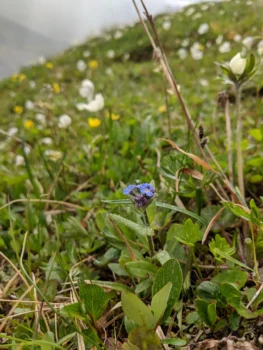
Asian Forget-Me-Not: A Delicate Native Beauty for Cool Climate Gardens
If you’re looking for a charming native wildflower that brings delicate beauty to your garden without being fussy, the Asian forget-me-not (Myosotis asiatica) might just be your perfect match. This lovely little perennial forb proves that sometimes the most understated plants make the biggest impact.
What Makes Asian Forget-Me-Not Special?
Asian forget-me-not is a true North American native, calling home to some of our continent’s most spectacular regions. This hardy perennial belongs to the forget-me-not family and shares the characteristic tiny, sky-blue flowers with sunny yellow centers that make these plants so beloved. But unlike some of its more aggressive cousins, this species plays well with others in the garden.
As a forb (essentially a non-woody flowering plant), Asian forget-me-not grows close to the ground and lacks any significant woody stems. Think of it as nature’s way of creating a living carpet of delicate blue blooms.
Where Does It Call Home?
This resilient little beauty has claimed territory across Alaska, western and central Canada, and much of the western United States. You’ll find it thriving in Alberta, British Columbia, Alaska, Colorado, Yukon, Northwest Territories, Idaho, Montana, Oregon, Washington, and Wyoming. It’s particularly well-suited to the cooler climates of these northern and mountainous regions.
- Species observed
- No observations
Garden Appeal and Design Potential
Don’t let its modest size fool you—Asian forget-me-not packs a visual punch when planted in drifts or allowed to naturalize. The small blue flowers, typically measuring just 2-6mm across, create a stunning carpet effect that’s perfect for:
- Rock gardens and alpine settings
- Woodland edges and shade gardens
- Naturalized wildflower meadows
- Ground cover in cool, moist areas
- Borders and edging along pathways
The plant’s low-growing habit makes it an excellent choice for filling in gaps between larger perennials or creating a living mulch around trees and shrubs.
Growing Conditions and Care
One of the best things about Asian forget-me-not is how easygoing it is—once you understand what it likes. This plant thrives in USDA hardiness zones 2-6, making it perfect for gardeners in cooler climates.
Ideal Growing Conditions:
- Soil: Moist, well-draining soil (it’s quite adaptable to different soil types)
- Light: Partial shade to full sun (appreciates some afternoon shade in warmer areas)
- Water: Consistent moisture without waterlogging
- Climate: Cool temperatures and good air circulation
The plant’s wetland status as facultative means it’s remarkably flexible about moisture levels—it can handle both wetland and non-wetland conditions, though it definitely prefers the moister side of things.
Planting and Maintenance Tips
Asian forget-me-not is refreshingly low-maintenance once established. Here’s how to set it up for success:
- Plant in spring or fall when temperatures are cool
- Space plants 6-12 inches apart for ground cover effect
- Water regularly during the first growing season to establish roots
- Apply a light mulch to retain moisture and suppress weeds
- Allow plants to self-seed for natural spreading (they’re not aggressive)
- Deadhead spent flowers to encourage continued blooming or leave them for wildlife
Wildlife and Pollinator Benefits
While small in stature, Asian forget-me-not pulls its weight in supporting local ecosystems. The tiny flowers are perfectly sized for small pollinators including native bees, beneficial flies, and delicate butterflies. The extended blooming period provides a reliable nectar source throughout the growing season.
Why Choose Native?
By choosing Asian forget-me-not, you’re supporting local ecosystems while adding beauty to your garden. Native plants like this one are perfectly adapted to local climate conditions, require less water and fertilizer than exotic alternatives, and provide the specific resources that native wildlife populations depend on.
Plus, there’s something deeply satisfying about growing a plant that has been thriving in your region for thousands of years—it’s like welcoming an old friend into your garden.
Is Asian Forget-Me-Not Right for Your Garden?
This charming native is ideal for gardeners who:
- Live in cooler climates (zones 2-6)
- Want low-maintenance ground cover
- Appreciate subtle, natural beauty over flashy blooms
- Are creating wildlife-friendly gardens
- Have partially shaded or woodland areas to fill
- Value native plants and local ecosystem support
If you’re in Asian forget-me-not’s native range and looking for a gentle, beautiful addition to your garden that asks for little but gives back plenty, this delightful native deserves a spot in your landscape. Sometimes the most memorable gardens are built on the quiet charm of plants exactly like this one.