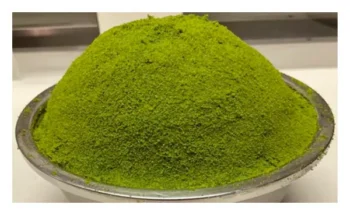
Asian Watermeal: The World’s Tiniest Flowering Plant for Your Water Garden
Meet Asian watermeal (Wolffia globosa), quite possibly the most unusual plant you’ll ever encounter in your gardening journey. This microscopic marvel holds the impressive title of being one of the world’s smallest flowering plants, measuring just about 1 millimeter across – smaller than a pinhead! If you’re looking to add something truly unique to your water garden, this floating wonder might just capture your imagination.
What Exactly Is Asian Watermeal?
Asian watermeal is a perennial aquatic plant that belongs to the duckweed family. Despite its common name, it has nothing to do with actual meal – the name comes from its tiny, grain-like appearance floating on water surfaces. Each individual plant looks like a microscopic green dot, but when they multiply (and trust us, they do!), they create dense, carpet-like mats across the water surface.
This little botanical curiosity is technically classified as a forb – a non-woody vascular plant that lacks significant woody tissue above ground. But don’t let the technical classification fool you; there’s nothing ordinary about this extraordinary plant.
Where Does Asian Watermeal Come From?
Originally native to Asia, particularly Southeast Asia, Asian watermeal has made itself at home in several U.S. states including California, Florida, Hawaii, and Kentucky. It’s considered non-native to the continental United States but has naturalized in these areas, reproducing without human intervention and persisting in suitable habitats.
- Species observed
- No observations
Should You Grow Asian Watermeal in Your Garden?
The answer depends entirely on what you’re hoping to achieve with your water feature. Here’s what you need to consider:
The Good: Asian watermeal is absolutely fascinating from a botanical perspective. It’s perfect for aquarium enthusiasts, water garden hobbyists, or anyone who loves unusual plants. It provides natural water surface coverage and can help reduce algae by competing for nutrients.
The Not-So-Good: This plant is a prolific reproducer. Under ideal conditions, it can quickly cover entire water surfaces, potentially overwhelming smaller water features. Its tiny size also means it offers minimal aesthetic impact compared to larger aquatic plants.
Native Alternatives: If you’re looking to support local ecosystems, consider native alternatives like American lotus, spatterdock, or native duckweed species that provide similar water coverage while supporting local wildlife.
Growing Conditions and Care
Asian watermeal has very specific requirements that make it suitable only for certain situations:
- Water Requirements: Needs still or very slow-moving freshwater
- Climate: Thrives in USDA hardiness zones 9-11, requiring consistently warm water temperatures
- Nutrients: Prefers nutrient-rich water conditions
- Sunlight: Does well in both full sun and partial shade
Planting and Maintenance Tips
Growing Asian watermeal is surprisingly simple, though controlling it can be the bigger challenge:
- Introduction: Simply place the plants directly into your water feature – no soil required!
- Feeding: May benefit from aquatic plant fertilizer, especially in nutrient-poor water
- Temperature: Keep water temperatures warm; the plant won’t survive freezing conditions
- Population Control: Regular harvesting may be necessary to prevent complete surface coverage
- Winter Care: In cooler climates, bring indoors or maintain in heated water features
Wildlife and Ecological Benefits
Due to its extremely small size and aquatic nature, Asian watermeal provides limited benefits for pollinators and larger wildlife. However, it can serve as food for waterfowl and provides some habitat for aquatic microorganisms.
The Bottom Line
Asian watermeal is definitely a conversation starter and a unique addition to specialized aquatic gardens or aquarium systems. While it won’t provide the dramatic visual impact of larger water plants, it offers the novelty of growing one of the world’s smallest flowering plants. Just be prepared for its enthusiastic growth habits and consider whether native alternatives might better serve both your garden goals and local ecosystem needs.
Whether you decide to grow this microscopic marvel or opt for native alternatives, remember that the best garden choices are always the ones that align with your gardening goals, local conditions, and ecological values.