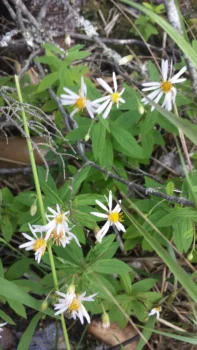
Blake’s Aster: A Hardy Native Wildflower for Wet Spots
If you’ve been searching for a native plant that thrives in those persistently moist spots in your garden, Blake’s aster (Oclemena ×blakei) might just be your new best friend. This unassuming perennial wildflower has a knack for turning soggy soil situations into something beautiful and beneficial for local wildlife.
What Makes Blake’s Aster Special
Blake’s aster is a true North American native, naturally occurring across a impressive range from the Maritime provinces of Canada down through the northeastern United States. You’ll find this hardy perennial growing wild from New Brunswick and Nova Scotia all the way south to Pennsylvania and New Jersey, with populations scattered through states like Maine, Massachusetts, Michigan, and Vermont.
- Species observed
- No observations
As a member of the aster family, this plant produces those classic daisy-like flowers that we associate with autumn wildflower displays. But what really sets Blake’s aster apart is its love affair with moisture – this is one native plant that actually prefers to keep its feet wet.
A Perfect Fit for Challenging Spots
Blake’s aster earns its classification as a Facultative Wetland plant, which is a fancy way of saying it usually grows in wetlands but can tolerate drier conditions too. This flexibility makes it incredibly valuable for gardeners dealing with:
- Rain gardens and bioswales
- Pond margins and stream banks
- Low-lying areas that stay damp
- Native plant gardens with naturalistic design
Growing Blake’s Aster Successfully
One of the best things about Blake’s aster is how low-maintenance it becomes once established. This perennial forb (that’s garden-speak for a non-woody flowering plant) spreads naturally by underground stems, gradually forming attractive colonies that look completely natural in the landscape.
For the best results, plant Blake’s aster in USDA hardiness zones 3 through 8, where it’s perfectly adapted to survive harsh winters and variable growing conditions. It performs well in partial shade to full sun, though it appreciates some afternoon shade in hotter climates.
Care Tips for Happy Plants
- Choose consistently moist to wet soil locations
- Allow space for natural spreading – this plant likes to roam
- Minimal fertilization needed – it’s adapted to natural soil conditions
- Cut back in late fall or early spring for tidy appearance
- Be patient – it may take a season or two to become fully established
Wildlife and Pollinator Benefits
Like many native asters, Blake’s aster provides important late-season nectar when many other flowers have finished blooming. Native bees, butterflies, and other beneficial insects rely on these autumn blooms to fuel up before winter or migration. The seeds that follow also provide food for birds and small wildlife.
Is Blake’s Aster Right for Your Garden?
Blake’s aster might be the perfect choice if you’re looking to create a more naturalistic landscape that works with your site’s conditions rather than fighting against them. It’s particularly valuable for gardeners who want to support native wildlife while managing challenging wet areas in an attractive, low-maintenance way.
Keep in mind that this plant does spread naturally, so it’s best suited for informal gardens where it has room to establish colonies. If you prefer more controlled, formal plantings, you might want to consider other native options for your wet spots.
Also known by its scientific synonym Aster blakei, this resilient native proves that sometimes the best garden solutions are the ones that nature has already perfected through thousands of years of adaptation to local conditions.