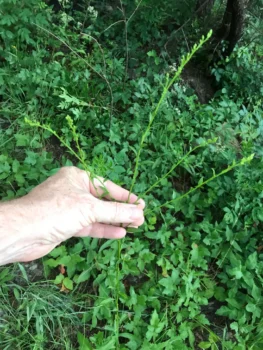
Atlantic Goldenrod: A Native Southeastern Beauty for Your Garden
If you’re looking for a native plant that brings late-season color and buzzes with pollinator activity, Atlantic goldenrod might just be your new garden favorite. This southeastern native knows how to make an entrance when most other flowers are calling it quits for the year.
What is Atlantic Goldenrod?
Atlantic goldenrod (Solidago arguta var. caroliniana) is a perennial herbaceous plant that belongs to the diverse goldenrod family. Don’t let the scientific name intimidate you – this is simply one of nature’s most reliable late-season performers. As a forb, it’s an herbaceous plant that comes back year after year without developing woody stems like shrubs or trees.
You might also see this plant listed under several botanical synonyms in older gardening references, including Solidago boottii var. caroliniana or Solidago yadkinensis, but they’re all referring to the same wonderful plant.
Where Does It Call Home?
This goldenrod variety is a true southeastern native, naturally occurring across 15 states from Maryland down to Florida and west to Arkansas and Louisiana. You’ll find it thriving in Alabama, Arkansas, Florida, Georgia, Kentucky, Louisiana, Maryland, Mississippi, Missouri, North Carolina, South Carolina, Tennessee, Virginia, and West Virginia.
- Species observed
- No observations
Why Plant Atlantic Goldenrod?
There are plenty of compelling reasons to give this native beauty a spot in your landscape:
- Pollinator magnet: The bright yellow flower clusters are absolute bee and butterfly magnets, providing crucial late-season nectar when many other flowers have finished blooming
- Low maintenance: Once established, it’s quite drought tolerant and requires minimal care
- Native plant benefits: Supporting local ecosystems and providing habitat for native wildlife
- Late-season color: Brings vibrant yellow blooms when your garden needs it most – typically late summer through fall
- Adaptable: Thrives in various light conditions from partial shade to full sun
Perfect Garden Settings
Atlantic goldenrod shines in several garden styles:
- Native plant gardens: A natural choice for authentic regional plantings
- Pollinator gardens: Essential for supporting late-season pollinators
- Meadow plantings: Adds structure and color to naturalized areas
- Woodland edges: Thrives in the transition zones between forest and open areas
- Rain gardens: Handles varying moisture conditions well
Growing Conditions and Care
One of the best things about Atlantic goldenrod is how easygoing it is. Here’s what it prefers:
- Light: Partial shade to full sun (more flexible than many plants)
- Soil: Well-drained soils of various types
- Water: Drought tolerant once established, though it appreciates regular water during dry spells
- Hardiness: Suitable for USDA zones 5-9
Planting and Care Tips
Getting Atlantic goldenrod established in your garden is refreshingly straightforward:
- Planting time: Spring or fall are ideal planting seasons
- Spacing: Give plants room to spread – they may form colonies over time through underground rhizomes
- Maintenance: Minimal care required once established
- Deadheading: Remove spent flower heads if you want to prevent self-seeding, though the seeds are valuable wildlife food
- Division: Can be divided every few years if you want to propagate or control spread
A Few Considerations
Like many goldenrods, Atlantic goldenrod can spread via underground rhizomes, so it may naturalize in your garden over time. This isn’t necessarily a bad thing – it creates lovely drifts of color – but it’s something to keep in mind when planning your garden layout.
Also, don’t blame goldenrod for your fall allergies! That’s typically ragweed, which blooms at the same time. Goldenrod pollen is too heavy to become airborne – it relies on insects for pollination, which is exactly why it’s so valuable for your garden’s ecosystem.
The Bottom Line
Atlantic goldenrod is a fantastic choice for gardeners in its native range who want to support local wildlife while enjoying beautiful late-season blooms. It’s particularly valuable if you’re working to create habitat for native pollinators or simply want a reliable, low-maintenance perennial that knows how to put on a show when other flowers are fading.
With its adaptable nature, pollinator benefits, and authentic regional character, Atlantic goldenrod proves that native plants can be both ecologically beneficial and garden-worthy. Give it a try – your local bees and butterflies will thank you!