Atlantic White Cedar: A Native Evergreen for Wet Spots
If you’ve got a soggy spot in your yard that makes you scratch your head wondering what to plant, let me introduce you to your new best friend: the Atlantic white cedar. This native evergreen tree might just be the perfect solution for those challenging wet areas where other plants fear to tread.
What Is Atlantic White Cedar?
Atlantic white cedar (Chamaecyparis thyoides), also known as southern white cedar, is a native North American evergreen tree that’s perfectly at home in wetlands. This beautiful conifer belongs to the cypress family and has been quietly thriving in swampy areas for thousands of years. Unlike its drama-queen garden cousins, this tree actually prefers to keep its feet wet!
Where Does It Naturally Grow?
This native gem calls the eastern United States home, naturally occurring from Maine down to Florida and as far west as Mississippi. You’ll find it growing wild in Alabama, Connecticut, Delaware, Florida, Georgia, Maine, Maryland, Massachusetts, Mississippi, New Hampshire, New Jersey, New York, North Carolina, Pennsylvania, Rhode Island, South Carolina, and Virginia.
- Species observed
- No observations
Why Your Garden Will Love Atlantic White Cedar
Here’s where this tree really shines in the landscape:
- Wetland Wonder: Classified as an obligate wetland plant, meaning it almost always occurs in wetlands naturally
- Attractive Form: Develops a lovely narrow, pyramidal shape that reaches about 50 feet tall at maturity
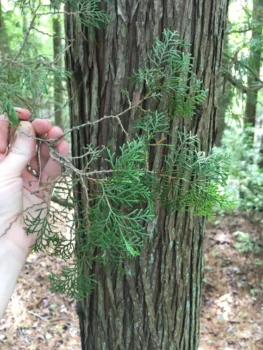
- Beautiful Bark: Features attractive fibrous, reddish-brown bark that adds winter interest
- Fine Foliage: Dense, scale-like leaves in blue-green to gray-green create a soft, fine texture
- Steady Growth: Moderate growth rate means you won’t wait forever, but it won’t outgrow its space quickly
- Long-lived: This is a long-term investment tree that can grace your landscape for generations
Perfect Garden Roles
Atlantic white cedar works beautifully in several landscape situations:
- Rain Gardens: Excellent choice for managing stormwater runoff
- Bog or Wetland Gardens: The ultimate naturalistic choice for wet areas
- Specimen Planting: Makes a striking focal point in the right setting
- Naturalized Areas: Perfect for creating native habitat
- Coastal Gardens: Naturally adapted to coastal plain conditions
Growing Conditions
Here’s what Atlantic white cedar needs to thrive:
- Moisture: Consistently moist to wet soil – this tree drinks like it’s at an all-you-can-drink buffet
- Soil Type: Prefers coarse to medium-textured soils; not great with heavy clay
- pH: Loves acidic conditions (pH 3.5-6.3) – definitely not a lime lover
- Sunlight: Full sun to partial shade, though it performs best in full sun
- Hardiness: Hardy in USDA zones 3-8, tolerating temperatures as low as -36°F
- Drainage: High tolerance for waterlogged conditions that would drown other trees
Planting and Care Tips
Getting your Atlantic white cedar established is straightforward if you follow these guidelines:
- Site Selection: Choose the wettest spot in your yard – seriously, this tree loves water
- Soil Preparation: If your soil isn’t naturally acidic, consider amending with organic matter like peat moss
- Planting Time: Spring planting gives the tree a full growing season to establish
- Spacing: Allow plenty of room – mature trees can spread 15-25 feet
- Watering: Keep consistently moist, especially during establishment
- Fertilizing: Medium fertility requirements – avoid over-fertilizing
- Pruning: Minimal pruning needed; this tree naturally maintains good form
Propagation and Availability
Good news for eager gardeners – Atlantic white cedar is routinely available at native plant nurseries. You can find it as container plants or bare-root specimens. The tree can be grown from seed, though patience is required as seeds need cold stratification and seedlings have medium vigor.
Wildlife and Ecological Benefits
While specific wildlife benefits weren’t detailed in available data, native evergreens like Atlantic white cedar typically provide:
- Year-round shelter for birds and small wildlife
- Nesting sites in dense foliage
- Seeds for wildlife food (though small)
- Habitat for native insects that support the food web
Is Atlantic White Cedar Right for Your Garden?
This native beauty is perfect for you if:
- You have consistently wet or boggy areas in your landscape
- You want to create native habitat
- You’re dealing with stormwater management issues
- You love the look of evergreen trees with fine texture
- You’re in USDA zones 3-8
However, Atlantic white cedar might not be your best choice if you have dry conditions, alkaline soil, or limited space for a large tree.
The Bottom Line
Atlantic white cedar is like that reliable friend who’s always there when you need them – it won’t let you down in challenging wet conditions where other trees might struggle. This native evergreen offers year-round beauty, requires minimal maintenance once established, and provides valuable habitat for wildlife. If you’ve been struggling with a wet area in your landscape, consider giving this wetland wonder a try. Your soggy soil will finally have met its match!