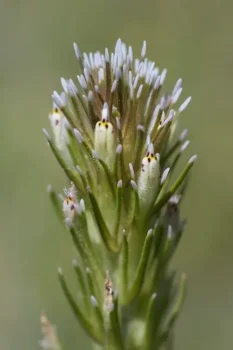
Attenuate Indian Paintbrush: A Wild Beauty That’s Best Left in Nature
If you’re familiar with the vibrant red and orange Indian paintbrushes that grace western meadows, you might be surprised to learn about their understated cousin: the attenuate Indian paintbrush (Castilleja attenuata). This little wildflower is quite the wallflower compared to its flashy relatives, and there’s a very good reason why you won’t find it at your local nursery.
What Makes This Paintbrush Different
The attenuate Indian paintbrush is an annual forb that’s native to western North America. Unlike the showstopping red paintbrushes that steal the spotlight in wildflower displays, this species produces small, yellowish-green bracts that are far more subtle. It’s the introvert of the paintbrush family – quietly going about its business while its relatives grab all the attention.
You might also see this plant referred to by its former scientific name, Orthocarpus attenuatus, in older field guides and botanical references.
Where You’ll Find It Growing Wild
This native wildflower calls the western regions of North America home, naturally occurring across British Columbia, Arizona, California, Oregon, and Washington. It’s adapted to the diverse climates and conditions found throughout these areas, from coastal regions to inland valleys.
- Species observed
- No observations
The Plot Twist: Why You Shouldn’t Try to Grow It
Here’s where things get interesting – and a bit complicated. The attenuate Indian paintbrush is what botanists call a hemiparasite, which means it’s only partially able to make its own food through photosynthesis. To survive and thrive, it needs to tap into the root systems of other plants, essentially becoming a botanical freeloader.
This fascinating survival strategy makes it nearly impossible to grow in a typical home garden setting. Without the right host plants and the complex soil relationships that develop in natural ecosystems, this little paintbrush simply won’t survive transplantation or cultivation attempts.
Garden-Friendly Alternatives
If you’re drawn to native paintbrushes for your garden, consider these more cooperative alternatives:
- Prairie paintbrush (Castilleja sessiliflora) – better for cultivation
- Desert paintbrush (Castilleja chromosa) – stunning orange-red flowers
- Scarlet paintbrush (Castilleja coccinea) – the classic red wildflower
These species, while still challenging to grow, have proven more adaptable to garden conditions with proper care and research.
Appreciating It in the Wild
The best way to enjoy the attenuate Indian paintbrush is to seek it out during hiking and nature walks in its native habitat. As an annual plant, it completes its entire life cycle in one growing season, so timing your wildflower viewing trips during late spring and early summer will give you the best chance of spotting this elusive species.
While it may not have the dramatic flair of its more colorful cousins, there’s something quietly beautiful about discovering this modest wildflower during your outdoor adventures. It’s a gentle reminder that not every native plant is destined for the garden – some are meant to remain wild and free, playing their specialized role in the complex web of natural ecosystems.
The Bottom Line
Sometimes the most responsible thing we can do as gardeners is to admire a plant from afar rather than trying to bring it home. The attenuate Indian paintbrush is one of those special natives that’s best appreciated in its natural setting, where it can maintain the intricate relationships it needs to survive and thrive.