Autumn Coralroot: The Mysterious Native Orchid You Can’t (And Shouldn’t) Grow
Meet one of North America’s most fascinating and elusive native orchids: the autumn coralroot (Corallorhiza odontorhiza var. odontorhiza). This quirky little plant challenges everything we think we know about gardening, because frankly, you can’t actually grow it in your garden—and that’s perfectly okay!
What Makes Autumn Coralroot Special
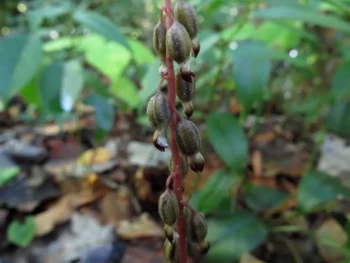
Autumn coralroot is a perennial forb that belongs to the orchid family, but it’s unlike any orchid you’ve probably encountered. This fascinating plant is what botanists call a saprophytic orchid, meaning it has ditched the whole photosynthesis thing entirely. Instead of green leaves and stems, autumn coralroot sports brownish or yellowish stems that emerge directly from the forest floor like tiny, mysterious periscopes.
The plant gets its common name from its coral-like underground root system and its late-season blooming period, typically appearing in late summer through early fall. You might also encounter it listed under various scientific synonyms, including Corallorhiza micrantha.
Where You’ll Find This Native Wonder
Autumn coralroot is truly a continental traveler, native to both Canada and the lower 48 United States. Its impressive range spans from coast to coast, thriving in states and provinces including Alabama, Arkansas, Ontario, Connecticut, Quebec, Delaware, Florida, Georgia, Illinois, Indiana, Iowa, Kansas, Kentucky, Louisiana, Maine, Maryland, Massachusetts, Michigan, Minnesota, Mississippi, Missouri, Nebraska, New Hampshire, New Jersey, New York, North Carolina, Ohio, Oklahoma, Pennsylvania, Rhode Island, South Carolina, South Dakota, Tennessee, Texas, Vermont, Virginia, West Virginia, and Wisconsin.
- Species observed
- No observations
This extensive distribution makes autumn coralroot one of our most widespread native orchids, adapted to USDA hardiness zones 3 through 9.
The Reality Check: Why You Can’t Grow Autumn Coralroot
Here’s where autumn coralroot gets really interesting—and where your gardening dreams might need a reality check. This orchid has evolved a complex relationship with soil fungi that’s nearly impossible to replicate in a typical garden setting. The plant essentially partners with these fungi, which in turn break down organic matter in the forest floor to provide nutrients.
Without its specific fungal partners and the deep, undisturbed forest conditions it requires, autumn coralroot simply cannot survive transplantation or cultivation. This isn’t a plant you can order from a catalog or propagate in your backyard.
Appreciating Autumn Coralroot in Its Natural Habitat
While you can’t grow autumn coralroot, you can certainly appreciate it! Here’s what to look for during woodland walks:
- Small, leafless stems reaching 4-12 inches tall
- Brownish to yellowish coloration throughout the plant
- Tiny, inconspicuous flowers arranged along the upper portion of the stem
- Growing in deep forest shade, often near decaying logs or leaf litter
- Blooming period from late summer through fall
Supporting Native Orchids in Your Landscape
Even though you can’t grow autumn coralroot directly, you can support native orchid populations and similar woodland species by:
- Creating undisturbed woodland areas on your property
- Leaving fallen logs and leaf litter in forested areas
- Avoiding soil disturbance in natural woodland settings
- Planting other native woodland wildflowers that thrive in similar conditions
- Supporting local conservation efforts that protect forest habitats
The Bigger Picture
Autumn coralroot serves as a wonderful reminder that not every native plant belongs in our cultivated gardens—and that’s perfectly natural! Some species, like this mysterious orchid, play their ecological roles best when left undisturbed in their native woodland homes.
Instead of trying to bring autumn coralroot to your garden, consider taking garden-style appreciation to the woods. Plan autumn woodland walks specifically to search for this elusive native orchid, and celebrate the complex web of relationships that allow it to thrive in its natural habitat.
The next time you’re walking through a mature forest and spot these curious brownish stems emerging from the leaf litter, take a moment to appreciate one of nature’s most fascinating partnerships in action. Sometimes the best gardening advice is knowing when not to garden at all!