Awl-Leaf Lilaea: A Tiny Native Treasure for Wetland Gardens
If you’re looking to create an authentic wetland habitat in your garden, you might want to get acquainted with awl-leaf lilaea (Lilaea scilloides). This petite annual might not win any beauty contests, but it’s a fascinating native plant that plays an important role in North America’s wetland ecosystems.
What is Awl-Leaf Lilaea?
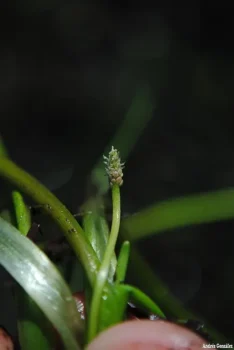
Awl-leaf lilaea, also known by its scientific name Lilaea scilloides, is a small annual grass-like plant that belongs to the arrow-grass family. Don’t let the name fool you—it’s not actually a grass, though it certainly looks like one with its narrow, pointed leaves that form small rosettes close to the ground.
This modest plant typically reaches only about 0.8 feet tall, making it one of the shorter players in the wetland plant community. Its growth form is described as bunch-like with a semi-erect shape, and it has a moderate growth rate during its active growing period in spring, summer, and fall.
Where Does It Grow Naturally?
Awl-leaf lilaea is native to both Canada and the lower 48 states, with a distribution that spans across the western regions of North America. You’ll find it naturally growing in Alberta, British Columbia, California, Saskatchewan, Idaho, Montana, Nevada, Oregon, and Washington.
- Species observed
- No observations
This plant is what botanists call an obligate wetland species, meaning it almost always occurs in wetlands across all regions where it’s found—from the Arid West to the Great Plains to the Western Mountains, Valleys, and Coast regions.
Should You Plant Awl-Leaf Lilaea?
Here’s the honest truth: awl-leaf lilaea isn’t going to be the showstopper of your garden. Its flowers are small, green, and not particularly conspicuous, blooming in mid-spring. The foliage is green with a medium texture, and the seeds are small and brown. If you’re looking for dramatic color or eye-catching blooms, this isn’t your plant.
However, there are some compelling reasons you might want to consider it:
- Authentic native habitat: If you’re creating a true-to-nature wetland garden, this little plant adds authenticity
- Ecological value: As a native species, it provides habitat and food sources for local wildlife
- Unique growing niche: It fills a specific ecological role that few other plants can match
- Low maintenance: Once established in the right conditions, it largely takes care of itself
Growing Conditions and Care
If you decide to grow awl-leaf lilaea, be prepared to meet its very specific needs. This plant is quite particular about its growing conditions:
Water Requirements: This is non-negotiable—awl-leaf lilaea needs high moisture conditions and can tolerate anaerobic (low-oxygen) soils that would kill many other plants. Think seasonal flooding or consistently saturated soils.
Soil Preferences: It adapts well to fine and medium-textured soils but won’t thrive in coarse, sandy soils. It can handle pH levels between 6.0 and 9.0 and has medium tolerance for both calcium carbonate and salinity.
Sun and Shade: While it can tolerate shade, it performs best with adequate sunlight.
Climate Needs: This plant requires at least 150 frost-free days and minimum temperatures around 52°F. It can handle precipitation ranging from 14 to 45 inches annually.
USDA Hardiness Zones
Based on its natural distribution from Saskatchewan down to California, awl-leaf lilaea is suitable for USDA hardiness zones 3 through 9, making it adaptable to a wide range of climates as long as its moisture requirements are met.
Planting and Propagation
Here’s where things get a bit challenging for the average gardener: awl-leaf lilaea is propagated by seed only, and there’s no known commercial source for seeds. You’ll need to collect seeds from wild populations (where legal and ethical) or connect with native plant societies and seed exchanges.
Key propagation facts:
- Seeds are available from summer through fall
- There are approximately 360,000 seeds per pound
- Seeds don’t persist long and should be planted relatively fresh
- Seedlings have medium vigor
- The plant has a slow spread rate and doesn’t reproduce vegetatively
What Type of Garden is This Plant Right For?
Awl-leaf lilaea is perfect for:
- Wetland restoration projects
- Rain gardens with standing water
- Seasonal pond margins
- Native plant gardens with boggy areas
- Educational or demonstration gardens focused on wetland ecology
It’s definitely not suitable for typical perennial borders, rock gardens, or any area that doesn’t stay consistently moist to wet.
Wildlife and Pollinator Benefits
While specific wildlife benefits aren’t well-documented, as a native wetland plant, awl-leaf lilaea likely provides food and habitat for various wetland insects, waterfowl, and other wildlife. The seeds may be consumed by birds, and the plant provides cover in wetland environments.
However, don’t expect this plant to attract butterflies or bees—its flowers are wind-pollinated and not designed to appeal to pollinators.
The Bottom Line
Awl-leaf lilaea is a specialist plant for specialist gardens. If you’re passionate about native plant restoration, creating authentic wetland habitats, or you simply have a boggy area that needs appropriate native vegetation, this little plant could be a perfect fit. Just don’t expect it to provide the visual drama of more conventional garden plants.
Remember, every ecosystem needs its supporting players, and awl-leaf lilaea is content to be exactly that—a quiet, essential member of the wetland community that does its job without fanfare.