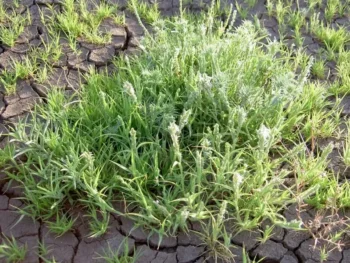
Awnless Spiralgrass: A Rare California Treasure Not Meant for Your Garden
If you’ve stumbled across the name awnless spiralgrass while researching native California plants, you might be wondering if this grass could add some local flair to your landscape. While I admire your enthusiasm for native plants, this is one species that’s definitely better left in the wild – and here’s why.
What is Awnless Spiralgrass?
Awnless spiralgrass (Tuctoria greenei) is a small annual grass that’s as picky about its living conditions as a Hollywood celebrity is about their trailer rider. This unassuming plant belongs to a specialized group of grasses that have evolved to thrive in one of California’s most unique and disappearing habitats: vernal pools.
You might also see this plant referenced by its scientific synonym, Orcuttia greenei, in older botanical references. But regardless of what you call it, this little grass is facing some big challenges.
Where Does It Come From?
Awnless spiralgrass is a California endemic, meaning it exists nowhere else on Earth. It’s found exclusively in the Central Valley of California, where it calls the region’s remaining vernal pools home.
- Species observed
- No observations
Why You Shouldn’t Plant It (Even Though You Can’t)
Here’s the thing about awnless spiralgrass – it’s not just rare, it’s critically endangered. This plant has earned a Global Conservation Status of S1, which translates to Critically Imperiled. In plain English, that means there are typically five or fewer known locations where it exists, with fewer than 1,000 individual plants remaining in the wild. The U.S. Fish and Wildlife Service has also listed it as Endangered under the Endangered Species Act.
The Habitat Challenge
Even if you could legally obtain seeds or plants (which you can’t through normal channels), awnless spiralgrass has habitat requirements that would make even the most dedicated gardener throw in the trowel. This plant is what we call an obligate wetland species, meaning it absolutely must have wetland conditions to survive.
But here’s the kicker – it doesn’t just need any wetland. Awnless spiralgrass specifically requires the unique conditions found in vernal pools: shallow depressions that fill with rainwater in winter and spring, then completely dry out by summer. Try to replicate this in your backyard, and you’ll quickly understand why this plant is best left to specialized conservation efforts.
What You Can Do Instead
While you can’t and shouldn’t try to grow awnless spiralgrass, there are plenty of other California native grasses that would love to call your garden home. Consider these alternatives:
- Purple needlegrass (Stipa pulchra) – California’s state grass
- Blue wildrye (Elymus glaucus) – great for erosion control
- California fescue (Festuca californica) – perfect for shady spots
- Deergrass (Muhlenbergia rigens) – adds dramatic texture
Supporting Conservation
The best way to help awnless spiralgrass is to support organizations working to protect and restore California’s vernal pool habitats. These unique ecosystems have been reduced to less than 10% of their original extent, primarily due to agricultural conversion and urban development.
By choosing other native plants for your garden and supporting habitat conservation efforts, you’re helping ensure that future generations might still have the chance to marvel at this remarkable little grass in its natural home.
Remember, not every native plant belongs in our gardens – and that’s perfectly okay. Sometimes the most respectful thing we can do is appreciate these botanical treasures from a distance and work to protect the wild places they call home.