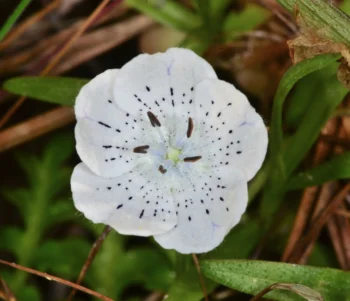
Baby Blue Eyes: A Charming Annual for Your Native Garden
If you’re looking for a delicate annual flower that brings soft blue hues to your garden, baby blue eyes (Nemophila menziesii var. atomaria) might just be the perfect addition to your landscape. This lovely forb belongs to a group of California natives that have captured gardeners’ hearts with their simple beauty and easy-going nature.
What is Baby Blue Eyes?
Baby blue eyes is an annual flowering plant that belongs to the waterleaf family. As a forb, it’s a non-woody plant that completes its entire life cycle in one growing season. This particular variety, atomaria, is one of several forms of Nemophila menziesii, each with its own subtle characteristics that make it special.
Where Does It Come From?
This charming annual is native to the lower 48 United States, with its natural range extending across California and Oregon. Interestingly, it has also established itself in Alaska, where it’s considered non-native but has successfully naturalized and reproduces on its own in the wild.
- Species observed
- No observations
Should You Plant Baby Blue Eyes?
Baby blue eyes can make a wonderful addition to the right garden setting. Since it’s native to much of the western United States, it supports local ecosystems when grown within its natural range. However, there are a few things to consider:
- It has a conservation status of S5T3T4, which suggests some level of rarity concern
- As an annual, you’ll need to replant it each year or allow it to self-seed
- It’s best suited for gardeners in California and Oregon where it’s truly native
If you’re outside its native range, consider looking for native alternatives that provide similar aesthetic appeal and better support your local wildlife.
Garden Design and Landscape Role
As a delicate annual forb, baby blue eyes works beautifully in several garden settings:
- Wildflower meadows and naturalized areas
- Native plant gardens
- Rock gardens where its low-growing habit can shine
- Mixed borders for seasonal color
- Container gardens for close-up appreciation
Growing Conditions and Care
While specific growing requirements for this variety aren’t well-documented, baby blue eyes generally prefer conditions similar to their native habitat. They typically thrive in areas with mild, moist winters and dry summers – much like California’s Mediterranean climate.
Since detailed care information for this specific variety is limited, it’s best to:
- Research local growing guides from native plant societies
- Contact regional botanical gardens for advice
- Connect with native plant nurseries in California or Oregon
- Start small with a few plants to learn their preferences in your garden
A Word About Responsible Sourcing
Given the rarity status of this variety, it’s crucial to source your plants or seeds responsibly. Always purchase from reputable native plant nurseries that propagate their stock rather than collecting from wild populations. This ensures you’re not contributing to the decline of wild populations while still enjoying these beautiful plants in your garden.
The Bottom Line
Baby blue eyes var. atomaria is a charming native annual that deserves consideration for gardens within its native range. While information specific to this variety can be hard to come by, its connection to the beloved baby blue eyes family makes it an intriguing choice for native plant enthusiasts. Just remember to source responsibly and consider whether this plant is truly appropriate for your specific location and garden goals.
If you’re passionate about supporting native biodiversity and have the right growing conditions, this delicate annual could become a treasured part of your garden’s seasonal display.