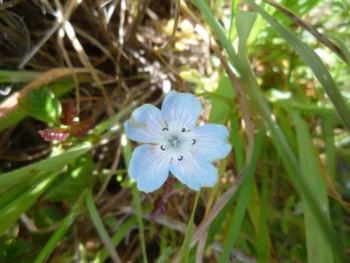
Baby Blue Eyes: California’s Charming Native Annual
If you’re looking for a native California plant that delivers big impact with minimal fuss, meet baby blue eyes (Nemophila menziesii var. menziesii). This delightful annual wildflower has been winning hearts with its sky-blue blooms and carpet-forming habit for generations of gardeners.
What Makes Baby Blue Eyes Special?
Baby blue eyes is a true California native, belonging to the waterleaf family. As an annual forb (a non-woody flowering plant), it completes its entire life cycle in one growing season, but what a show it puts on! The plant produces masses of cup-shaped flowers in the most gorgeous shade of blue you can imagine – think perfect spring sky with fluffy white clouds.
This native beauty is found naturally throughout California, from coastal areas to inland foothills. Its native status means it’s perfectly adapted to local climate conditions and plays an important role in supporting native wildlife.
- Species observed
- No observations
Garden Appeal and Landscape Role
Baby blue eyes typically grows 6-12 inches tall and spreads 12-18 inches wide, creating a lovely low carpet of color. The flowers bloom from late winter through spring, usually peaking in March and April. Each flower is about an inch across with five rounded petals in that signature blue shade, often with delicate white centers and darker blue veins.
In the garden, baby blue eyes excels as:
- Ground cover in naturalized areas
- Edging for pathways and borders
- Companion planting with other California natives
- Wildflower meadow component
- Container garden focal point
Perfect Garden Settings
This versatile native fits beautifully into several garden styles. It’s a natural choice for California native plant gardens, where it pairs wonderfully with poppies, lupines, and other spring wildflowers. Cottage garden enthusiasts love its old-fashioned charm, while those creating naturalized landscapes appreciate how it self-seeds and returns year after year.
Pollinator Paradise
Baby blue eyes is a pollinator magnet! Bees absolutely adore the flowers, and you’ll often see them buzzing happily from bloom to bloom. Butterflies and other beneficial insects also visit regularly, making this plant a valuable addition to any pollinator-friendly garden.
Growing Conditions
As a California native, baby blue eyes has adapted to the state’s Mediterranean climate. It thrives in:
- USDA hardiness zones 7-10
- Partial shade to full sun (morning sun with afternoon shade is ideal)
- Well-draining soil (adaptable to various soil types)
- Cool, moist conditions during growing season
- Areas with winter chill
Planting and Care Tips
The best news about baby blue eyes? It’s remarkably easy to grow! Here’s how to ensure success:
When to Plant: Sow seeds in fall (October through December) for spring blooms. This cool-season annual needs that winter chill period to perform its best.
Planting: Direct seed is the way to go – baby blue eyes doesn’t like root disturbance. Simply scatter seeds over prepared soil and lightly rake in. No need to bury deeply; these seeds need some light to germinate.
Watering: Water regularly during the growing season, but don’t overdo it. Once established, plants are somewhat drought tolerant, though they’ll look their best with consistent moisture through spring.
Maintenance: This is a low-maintenance plant! Let it go to seed naturally if you want it to return next year. You can deadhead spent flowers to extend blooming, but many gardeners prefer to let nature take its course.
Why Choose Baby Blue Eyes?
There are plenty of reasons to fall in love with this California native:
- Supports local ecosystems and native wildlife
- Requires minimal water once established
- Self-seeds for natural garden renewal
- Provides early season color when many plants are still dormant
- Attracts beneficial pollinators
- Deer resistant
- Perfect for beginning gardeners
Baby blue eyes proves that native plants can be both beautiful and practical. Whether you’re creating a dedicated native plant garden or simply want to add some easy-care spring color to your landscape, this charming annual delivers. Plus, you’ll have the satisfaction of knowing you’re supporting local wildlife and preserving California’s natural heritage – all while enjoying those gorgeous blue blooms that give this plant its perfect common name.