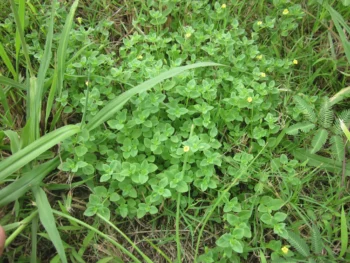
Baby Jump-Up: A Charming Native Ground Cover for Wet Areas
If you’re looking for a delicate, low-maintenance ground cover that thrives in those tricky wet spots in your garden, baby jump-up (Mecardonia procumbens) might just be the perfect solution. This charming little native plant brings a carpet of tiny white flowers to areas where many other plants would struggle to survive.
What is Baby Jump-Up?
Baby jump-up is a native forb – basically a non-woody flowering plant that spreads along the ground rather than growing tall. You might also see it listed under several botanical synonyms, including Mecardonia dianthera, Mecardonia peduncularis, or Mecardonia tenuis, but they’re all referring to this same delightful little plant.
As an annual or perennial (it can behave as either depending on conditions), baby jump-up produces small, snapdragon-like white flowers with bright yellow centers that seem to dance above the foliage. The plant forms a low, spreading mat that rarely grows more than a few inches tall but can spread several feet wide under ideal conditions.
Where Does Baby Jump-Up Grow Naturally?
This versatile native has quite an impressive range! You’ll find baby jump-up growing naturally across the southeastern United States, including Alabama, Florida, Louisiana, and Texas, as well as in southwestern states like Arizona and New Mexico. It’s also native to Puerto Rico and the U.S. Virgin Islands, and has established populations in parts of the Pacific Basin.
- Species observed
- No observations
Perfect for Wet Spots
Here’s where baby jump-up really shines – it absolutely loves moisture! Depending on your region, this plant is classified as either facultative wetland or obligate wetland, which means:
- In the Atlantic and Gulf Coastal Plain, it almost always grows in wetlands
- In other regions like the Arid West, Great Plains, and Caribbean, it usually prefers wet areas but can tolerate some drier conditions
This makes baby jump-up an excellent choice for rain gardens, bog gardens, pond edges, or those perpetually damp areas of your yard where grass won’t grow.
Growing Baby Jump-Up Successfully
Baby jump-up is surprisingly easy to grow if you can meet its basic needs:
Climate Requirements: This plant thrives in USDA hardiness zones 8-11, making it perfect for gardeners in warmer climates.
Light Needs: Baby jump-up performs best in full sun to partial shade. It can handle quite a bit of sun as long as its moisture needs are met.
Soil and Water: The key to success is consistent moisture. This plant loves moist to wet soils and can even tolerate periodic flooding. If you have a spot that stays soggy after rain, baby jump-up will likely love it there.
Maintenance: Once established, baby jump-up requires very little care. It can spread readily under ideal conditions, so you may want to keep an eye on it in smaller gardens.
Garden Design Ideas
Baby jump-up works beautifully in several landscape situations:
- Wetland Gardens: Perfect for creating naturalized wet areas that support local ecosystems
- Rain Gardens: Helps manage stormwater while providing habitat
- Pond Edges: Creates a soft, natural transition between water and land
- Ground Cover: Fills in difficult wet areas where other plants struggle
Benefits for Wildlife
As a native plant, baby jump-up supports local pollinators, particularly small native bees and flies that are attracted to its tiny flowers. By choosing native plants like this one, you’re helping to support the intricate web of relationships between plants and wildlife that have developed over thousands of years.
Should You Plant Baby Jump-Up?
Baby jump-up can be an excellent choice if you have the right conditions – namely, consistently moist soil and a climate within zones 8-11. It’s particularly valuable for gardeners looking to create habitat for native wildlife or manage wet areas naturally.
However, before planting, consider checking with your local native plant society or extension office to ensure you’re choosing the most appropriate native options for your specific area. While baby jump-up has a wide natural range, there may be other local natives that would be even more beneficial for your specific ecosystem.
If you do decide to grow baby jump-up, you’ll be rewarded with a charming, low-maintenance ground cover that brings both beauty and ecological benefits to those challenging wet spots in your garden.