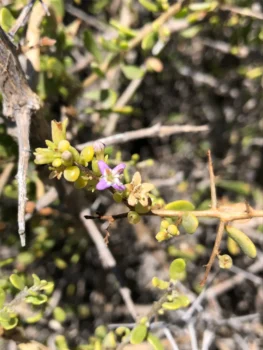
Baja Desert-Thorn: A Thorny Beauty for Water-Wise Gardens
Meet the Baja desert-thorn (Lycium brevipes), a scrappy little shrub that’s perfectly at home in the sun-baked landscapes of the American Southwest. This perennial native might not win any beauty contests at first glance, but don’t let its humble appearance fool you – this tough-as-nails plant has some serious staying power and surprising charm.
What Exactly Is Baja Desert-Thorn?
Baja desert-thorn is a multi-stemmed woody shrub that typically stays under 13 to 16 feet tall, though it usually keeps things much more modest in most garden settings. As a true native of Arizona and California, this plant has spent centuries perfecting the art of desert survival. You might also see it listed under its botanical synonyms, including Lycium richii or Lycium verrucosum, but they’re all referring to the same resilient little character.
Where Does It Call Home?
This desert dweller is native to the southwestern United States, specifically Arizona and California, where it thrives in the challenging conditions of desert and semi-desert regions. It’s particularly well-adapted to the Baja California region, hence its common name.
- Species observed
- No observations
Why Consider Growing Baja Desert-Thorn?
Here’s where this thorny customer really shines:
- Ultimate drought tolerance: Once established, this plant laughs in the face of water restrictions
- Native credentials: You’re supporting local ecosystems and wildlife
- Low maintenance: Perfect for gardeners who prefer plants that don’t need constant attention
- Wildlife value: The small tubular flowers (ranging from white to pale purple) attract pollinators, while the bright red berries provide food for birds
- Authentic desert aesthetic: Adds genuine Southwest character to landscapes
A Word of Caution
Before you rush out to plant one, there’s something to consider: Baja desert-thorn has some conservation status listings that suggest it may be uncommon in parts of its range. If you’re interested in growing this plant, make sure you source it from reputable native plant nurseries that use ethically collected or propagated material – never collect from wild populations.
Perfect Garden Situations
Baja desert-thorn is tailor-made for:
- Xeriscaped gardens and drought-tolerant landscapes
- Native plant gardens focused on Southwest species
- Naturalized areas where you want authentic desert character
- Wildlife gardens designed to support local pollinators and birds
- Low-maintenance landscape areas
Growing Conditions and Care
This plant thrives in USDA hardiness zones 9-11 and prefers:
- Sunlight: Full sun exposure – the more, the better
- Soil: Well-draining sandy or rocky soils; avoid heavy clay or areas that stay wet
- Water: Minimal once established – this is a true drought warrior
- Space: Give it room to spread naturally as a multi-stemmed shrub
Planting and Care Tips
Getting your Baja desert-thorn established is straightforward:
- Plant in fall or early spring when temperatures are moderate
- Water regularly during the first growing season to help establish roots
- Once established (usually after the first year), cut back on watering significantly
- Be cautious when pruning – those thorns are there for a reason!
- Avoid over-fertilizing, as this plant is adapted to lean soils
The Bottom Line
Baja desert-thorn isn’t the showiest plant in the garden center, but it’s exactly what water-wise, wildlife-friendly gardens need. If you’re gardening in the Southwest and want to create authentic habitat while reducing your water usage, this native shrub deserves serious consideration. Just remember to source it responsibly and give it the sunny, well-drained conditions it craves. Your local pollinators – and your water bill – will thank you.