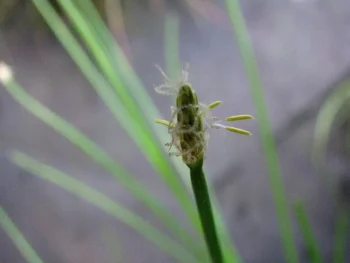
Bald Spikerush: The Unassuming Wetland Hero Your Garden Needs
Meet bald spikerush (Eleocharis erythropoda), a humble little sedge that might not win any beauty contests but deserves serious consideration for your wetland garden. This perennial graminoid—fancy speak for a grass-like plant—is one of those quiet workhorses that gets the job done without making a fuss about it.
What Exactly Is Bald Spikerush?
Don’t let the name fool you—bald spikerush isn’t actually bald, and it’s not technically a rush either! This slender sedge forms dense tufts of thin, thread-like stems that create a fine, almost hair-like texture in the landscape. You might also see it listed under its older scientific names like Eleocharis calva, but Eleocharis erythropoda is the current accepted name.
As a perennial, this little guy comes back year after year, slowly spreading to form colonies that help stabilize wet soil and provide habitat for wildlife.
Where Does It Call Home?
Bald spikerush is impressively widespread, native to practically the entire continent! You’ll find it naturally occurring from Alaska down through Canada and across most of the lower 48 states, even making an appearance in Hawaii. This extensive range speaks to its adaptability and hardiness across USDA zones 3-9.
- Species observed
- No observations
Why Your Garden Might Love This Little Sedge
While bald spikerush won’t stop traffic with showy flowers, it brings several valuable qualities to the table:
- Erosion control champion: Those dense root systems work overtime to hold soil in place along pond edges and stream banks
- Low maintenance: Once established, it pretty much takes care of itself
- Wildlife habitat: Provides cover and nesting material for waterfowl and other wetland creatures
- Natural water filtration: Helps improve water quality by filtering runoff
- Authentic native look: Perfect for naturalistic landscapes and restoration projects
The Perfect Spot for Bald Spikerush
This sedge thrives in consistently wet to saturated conditions, making it ideal for:
- Rain gardens and bioswales
- Pond and stream margins
- Bog gardens
- Restoration sites
- Areas with seasonal flooding
It’s happiest in full sun to partial shade and can tolerate periodic flooding—in fact, it prefers it!
Growing Bald Spikerush Successfully
The good news? Bald spikerush is refreshingly easy to grow if you can meet its one main requirement: consistent moisture.
Planting tips: Spring is the best time to establish new plants. Make sure your planting site stays wet year-round—this isn’t a plant that forgives drought. Space plants about 6-12 inches apart if you’re creating a colony.
Care requirements: Minimal! Keep the soil wet to saturated, and that’s about it. No fertilizing needed, and you can trim back old growth in late winter if desired, though it’s not necessary.
An Important Conservation Note
Here’s where things get interesting: while bald spikerush is widespread across North America, it’s listed as vulnerable (S3) in New Jersey and may have similar status in other regions. If you’re interested in adding this plant to your garden, please source it responsibly from reputable native plant nurseries rather than collecting from wild populations.
This rarity status in some areas actually makes it an even more valuable addition to appropriate gardens—you’ll be helping support local biodiversity while creating habitat for the creatures that depend on it.
The Bottom Line
Bald spikerush might not be the showstopper of your wetland garden, but it’s definitely the reliable friend you want on your team. If you have a consistently wet spot that needs some native plant love, or you’re working on a restoration project, this unassuming sedge could be exactly what you’re looking for. Just remember to source it responsibly, and you’ll have a low-maintenance native that quietly works hard to support your local ecosystem.