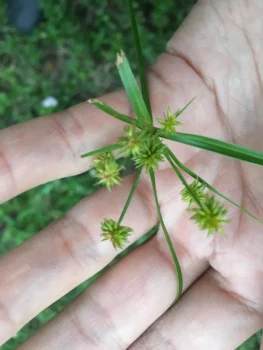
Baldwin’s Flatsedge: A Hardy Native Sedge for Wet Spots in Your Garden
If you’ve got a soggy spot in your yard that seems impossible to plant, meet your new best friend: Baldwin’s flatsedge (Cyperus croceus). This unassuming native sedge might not win any beauty contests, but it’s a workhorse that thrives where other plants fear to tread.
What is Baldwin’s Flatsedge?
Baldwin’s flatsedge is a perennial grass-like plant that belongs to the sedge family (Cyperaceae). Don’t let the name fool you—while it looks like grass, sedges have their own unique characteristics that set them apart. You might also see this plant listed under some of its botanical synonyms, including Cyperus multiflorus or Cyperus globulosus in older references.
Where Does Baldwin’s Flatsedge Call Home?
This hardy native has quite an impressive range across the southeastern United States. You’ll find Baldwin’s flatsedge naturally growing in Alabama, Arkansas, Delaware, Florida, Georgia, Kentucky, Louisiana, Maryland, Mississippi, Missouri, New Jersey, North Carolina, Oklahoma, Pennsylvania, South Carolina, Tennessee, Texas, Virginia, and even Puerto Rico. That’s a lot of territory for one little sedge!
- Species observed
- No observations
Why Consider Baldwin’s Flatsedge for Your Garden?
Here’s where Baldwin’s flatsedge really shines—it’s incredibly adaptable when it comes to moisture. This plant has a facultative wetland status across most of its range, meaning it’s equally happy in wet soils or regular garden conditions. In some regions, it leans slightly toward drier conditions (facultative upland), but overall, it’s remarkably flexible.
This adaptability makes it perfect for:
- Rain gardens and bioswales
- Pond edges and wet meadows
- Areas with seasonal flooding
- Naturalized landscapes and prairie restorations
- Low-maintenance ground cover in challenging spots
Growing Baldwin’s Flatsedge Successfully
The beauty of this native sedge lies in its simplicity. Baldwin’s flatsedge is remarkably low-maintenance once established, making it perfect for gardeners who want native plants without the fuss.
Ideal Growing Conditions
- Sunlight: Full sun to partial shade
- Soil: Moist to wet soils, but tolerates average garden conditions
- Hardiness: USDA zones 8-11 (based on its natural distribution)
- Moisture: Consistent moisture preferred, but drought tolerant once established
Planting and Care Tips
Baldwin’s flatsedge is refreshingly easy to grow. Plant it in spring or fall when temperatures are moderate. While it prefers consistently moist soil, don’t worry if you forget to water occasionally—this tough native can handle some neglect.
The plant may self-seed in ideal conditions, which can be a bonus if you’re looking to naturalize an area. Otherwise, it stays fairly well-behaved and won’t become aggressive in your garden.
Setting Realistic Expectations
Let’s be honest—Baldwin’s flatsedge isn’t going to be the star of your flower border. This is a subtle, understated plant that works best as a supporting player in naturalized settings. Its small, brownish flower clusters and narrow leaves provide texture and habitat value rather than showy blooms.
Think of it as the reliable friend who’s always there when you need them, rather than the flashy one who steals the spotlight at parties.
Wildlife and Ecological Benefits
While Baldwin’s flatsedge might not attract hordes of butterflies like a native wildflower would, it still provides valuable habitat for wildlife. Sedges offer shelter for small creatures and can be important food sources for waterfowl and other wildlife in wetland settings.
Is Baldwin’s Flatsedge Right for Your Garden?
This native sedge is perfect for you if you’re looking for:
- A low-maintenance solution for wet or challenging areas
- Native plants to support local ecosystems
- Texture and natural appeal in informal landscapes
- Plants that can handle both wet and dry conditions
However, you might want to pass if you’re seeking:
- Showy flowers or dramatic foliage
- A formal garden centerpiece
- Plants for very cold climates (zones 7 and below)
The Bottom Line
Baldwin’s flatsedge proves that sometimes the most valuable garden plants are the quiet ones that just do their job reliably. If you have a wet spot that needs covering or you’re creating a native plant garden, this humble sedge deserves a spot on your list. It won’t demand attention, but it will provide steady, dependable performance year after year—and sometimes, that’s exactly what a garden needs.