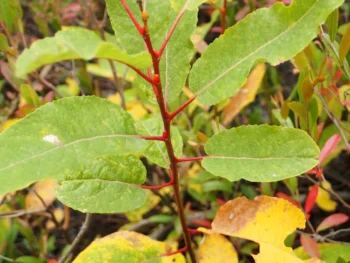
Balsam Willow: A Hardy Native Shrub for Wet Areas
If you’ve been searching for a native shrub that thrives in those persistently soggy spots in your yard, meet the balsam willow (Salix pyrifolia). This unassuming but incredibly useful shrub might just be the perfect solution for your challenging wet areas while providing excellent wildlife habitat.
What is Balsam Willow?
Balsam willow is a perennial, multi-stemmed woody shrub that typically grows to 4-5 meters (13-16 feet) in height, though it can sometimes grow taller or remain single-stemmed depending on environmental conditions. Like other willows, it’s a hardy plant that has adapted perfectly to life in wet conditions.
This native species goes by several scientific names in older literature, including Salix balsamifera, but Salix pyrifolia is the currently accepted name. Don’t let the scientific name shuffle confuse you – it’s the same reliable plant gardeners have been using for years.
Where Does Balsam Willow Grow Naturally?
Balsam willow is impressively widespread across northern North America. You’ll find it growing naturally throughout most of Canada, including Alberta, British Columbia, Manitoba, New Brunswick, Nova Scotia, Ontario, Prince Edward Island, Quebec, Saskatchewan, Yukon, Northwest Territories, Labrador, and Newfoundland. In the United States, it’s native to the northern states including Maine, Michigan, Minnesota, New Hampshire, New York, Vermont, and Wisconsin.
- Species observed
- No observations
Why Consider Balsam Willow for Your Garden?
Here’s where balsam willow really shines – it’s a problem-solver plant. Those areas of your yard that stay constantly moist or even waterlogged? Balsam willow loves them. Its wetland status varies by region, but it consistently thrives in wet conditions:
- In the Great Plains: Classified as Obligate Wetland (almost always found in wetlands)
- In the Midwest and Northcentral & Northeast regions: Classified as Facultative Wetland (usually in wetlands but can handle drier spots too)
Beyond solving drainage problems, balsam willow offers early season pollinator support. Its catkins emerge in spring when pollinators are desperately seeking nectar sources after a long winter. Bees and other beneficial insects will thank you for this early buffet.
Aesthetic Appeal and Landscape Role
While balsam willow won’t win any flashy flower contests, it brings subtle beauty to the landscape. The narrow, pointed leaves are dark green on top with pale undersides that flutter attractively in the breeze. The spring catkins add seasonal interest, and the overall form creates excellent structure in naturalistic plantings.
This shrub excels in:
- Rain gardens and bioswales
- Wetland restoration projects
- Naturalistic landscape designs
- Wildlife habitat gardens
- Erosion control on slopes near water
Growing Conditions and Hardiness
Balsam willow is remarkably adaptable and low-maintenance. It thrives in USDA hardiness zones 2-6, making it suitable for even the coldest northern gardens. Here’s what it prefers:
- Soil: Moist to wet soils; tolerates poor drainage that would kill other shrubs
- Sun exposure: Full sun to partial shade
- Water: Consistently moist conditions; drought tolerance is poor
- Soil type: Adaptable to various soil types as long as moisture is adequate
Planting and Care Tips
The beauty of native plants like balsam willow lies in their simplicity. Here’s how to get started:
Planting: Spring is the ideal planting time. Choose a location that stays consistently moist – think areas near downspouts, low spots in the yard, or edges of ponds or streams.
Care: Once established, balsam willow is incredibly low-maintenance. The key is ensuring adequate moisture, especially during the first growing season. After that, natural rainfall in its preferred regions usually provides sufficient water.
Pruning: Minimal pruning is needed. Remove any dead, damaged, or crossing branches in late winter or early spring if desired, but this shrub looks best when allowed to grow naturally.
Wildlife Benefits
Native willows like balsam willow are ecological powerhouses. The early spring catkins provide crucial nectar and pollen when few other plants are blooming. Throughout the growing season, the foliage supports various beneficial insects, and the dense branching structure offers nesting sites and shelter for birds.
Is Balsam Willow Right for Your Garden?
Consider balsam willow if you have wet areas that challenge other plants, want to support early season pollinators, or are creating habitat for wildlife. It’s particularly valuable in northern gardens where its extreme cold hardiness is an asset.
However, skip this shrub if you have consistently dry conditions or prefer highly manicured, formal garden styles. Balsam willow looks best in natural, relaxed settings where its informal growth habit can shine.
With its native status, low maintenance requirements, and valuable ecological benefits, balsam willow proves that sometimes the most useful plants are the ones that quietly do their job without demanding attention. In the right spot, it’s a garden hero worth considering.