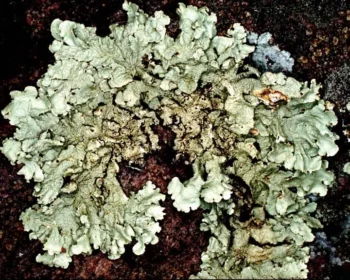
Baltimore Flavoparmelia Lichen: The Natural Air Quality Indicator in Your Landscape
Have you ever noticed those grayish-green, leaf-like patches growing on tree bark or rocks in your yard? You might be looking at Baltimore flavoparmelia lichen (Flavoparmelia baltimorensis), a fascinating organism that’s actually doing your garden – and your lungs – a favor!
What Exactly Is Baltimore Flavoparmelia Lichen?
Let’s clear up a common misconception first: lichens aren’t plants at all! They’re actually a remarkable partnership between fungi and algae, working together in perfect harmony. The Baltimore flavoparmelia lichen is what scientists call a foliose lichen, which simply means it has broad, flat, leaf-like lobes that create an attractive rosette pattern.
This native North American species goes by a few scientific names you might encounter, including Parmelia baltimorensis and Pseudoparmelia baltimorensis, but don’t worry about memorizing those tongue-twisters!
Where You’ll Find This Natural Wonder
Baltimore flavoparmelia lichen is naturally distributed throughout eastern North America, with a particular fondness for the Mid-Atlantic region. It’s perfectly at home from the southeastern United States up through parts of Canada, thriving in areas with suitable air quality and climate conditions.
Identifying Baltimore Flavoparmelia in Your Landscape
Spotting this lichen is easier than you might think once you know what to look for:
- Grayish-green coloration that may appear slightly bluish in certain light
- Broad, flat lobes that overlap like shingles
- Smooth, somewhat waxy texture on the upper surface
- Typically 2-6 inches across when fully developed
- Growing on tree bark (especially hardwoods) or occasionally on rocks
Why Baltimore Flavoparmelia Is Actually Great for Your Garden
Here’s where things get really exciting – this lichen is like having a natural air quality monitor right in your backyard! Baltimore flavoparmelia is quite sensitive to air pollution, so its presence is actually a good sign that your local air quality is relatively healthy.
While it doesn’t directly attract pollinators like flowering plants do, it plays an important role in the broader ecosystem. It provides microhabitats for tiny insects and contributes to the overall biodiversity that supports a healthy garden environment.
The Hands-Off Approach: Growing Baltimore Flavoparmelia
Here’s the thing about lichens – you can’t really grow them in the traditional sense. Unlike plants, you can’t just pop them in the ground with some fertilizer and hope for the best. Baltimore flavoparmelia establishes itself naturally when conditions are right, which includes:
- Clean air (they’re pollution-sensitive!)
- Appropriate moisture levels
- Suitable surfaces like tree bark or stone
- Time – lots of time, as lichens grow very slowly
Creating Lichen-Friendly Conditions
While you can’t plant Baltimore flavoparmelia lichen directly, you can create an environment where it’s more likely to show up naturally:
- Maintain mature trees with textured bark
- Avoid using harsh chemicals or pesticides near potential host trees
- Keep your landscape relatively natural and undisturbed
- Be patient – lichens can take years or even decades to establish
A Living Indicator of Environmental Health
Think of Baltimore flavoparmelia lichen as nature’s way of giving your landscape a thumbs up. Its presence suggests you’re maintaining a healthy, balanced outdoor environment that’s beneficial not just for lichens, but for all the other wildlife that calls your garden home.
So the next time you spot these distinctive grayish-green patches on your trees, take a moment to appreciate this remarkable organism. It’s not just adding natural character to your landscape – it’s also serving as a living testament to the quality of your local environment!