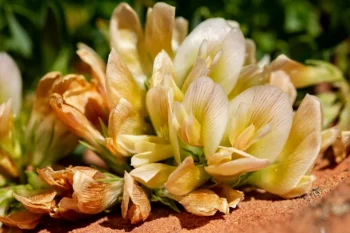
Barneby’s Clover: A Rare Wyoming Treasure Worth Protecting
Meet Barneby’s clover (Trifolium barnebyi), a little-known native perennial that’s as rare as it is charming. This Wyoming endemic might not be on every gardener’s wish list, but for those passionate about conservation and native plant preservation, it represents something truly special—a unique piece of America’s botanical heritage that deserves our attention and protection.
What Makes Barneby’s Clover Special?
Barneby’s clover is a native perennial forb that belongs to the legume family, just like its more common clover cousins. But unlike the clovers you might find scattered across suburban lawns, this species is found nowhere else in the world except Wyoming. It’s what botanists call an endemic species—nature’s way of creating something completely unique to a specific place.
This herbaceous perennial lacks woody stems and dies back to ground level each winter, regenerating from its root system when conditions are right. Like other clovers, it produces the characteristic three-leaflet leaves and small clustered flowers that range from white to pink.
Where Does Barneby’s Clover Call Home?
Barneby’s clover has chosen Wyoming as its exclusive home, where it grows in specific high-elevation habitats. This limited distribution is part of what makes the species so remarkable—and so vulnerable.
- Species observed
- No observations
A Conservation Concern
Here’s where things get serious: Barneby’s clover has a Global Conservation Status of S1S2, meaning it’s considered critically imperiled to imperiled. In plain English, this little clover is quite rare and faces real threats to its survival. This rarity status is a red flag that tells us we need to be extra careful about how we interact with this species.
Should You Grow Barneby’s Clover?
The short answer is: maybe, but only under very specific circumstances. If you’re a dedicated native plant enthusiast, conservation-minded gardener, or involved in legitimate restoration efforts, Barneby’s clover could be a meaningful addition to your garden. However, there are some important considerations:
- Responsible sourcing is essential: Never collect plants or seeds from wild populations. Only obtain plants or seeds from reputable sources engaged in conservation propagation
- Specialized growing conditions: This species likely requires specific high-elevation growing conditions that may be difficult to replicate in typical garden settings
- Conservation purpose: Growing this plant should be part of a broader conservation effort rather than simple garden decoration
Growing Conditions and Care
While specific growing requirements for Barneby’s clover aren’t well-documented, we can make educated guesses based on its Wyoming habitat:
- Climate: Likely adapted to USDA Hardiness Zones 3-6, with cool summers and cold winters
- Elevation: Probably prefers higher elevations with the cooler temperatures and specific moisture patterns found in Wyoming’s mountains
- Soil: As a legume, it likely prefers well-draining soils and can fix its own nitrogen
- Moisture: Probably adapted to natural precipitation patterns rather than regular irrigation
Pollinator and Wildlife Benefits
Like other native clovers, Barneby’s clover likely provides nectar for native bees and other pollinators. Its flowers would be particularly valuable to pollinators adapted to Wyoming’s high-elevation ecosystems. The seeds may also provide food for small wildlife, though specific relationships haven’t been well-studied.
The Bottom Line
Barneby’s clover represents the fascinating diversity of America’s native flora, but it’s not a casual garden plant. If you’re interested in this rare species, consider supporting conservation organizations working to protect Wyoming’s native plant communities. For most gardeners, choosing other native Wyoming plants or native clovers with wider distributions might be a more practical way to support native biodiversity.
Remember: the best way to protect rare plants like Barneby’s clover is to preserve their natural habitats and support scientific research and conservation efforts. Sometimes the most loving thing we can do for a rare plant is to admire it from afar and work to protect the wild places where it belongs.