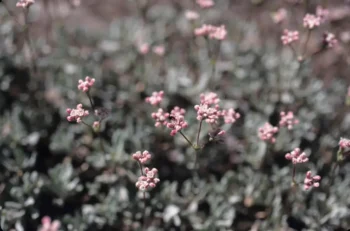
Barron’s Wild Buckwheat: A Rare California Native That’s Better Admired Than Planted
If you’ve stumbled upon Barron’s wild buckwheat (Eriogonum spectabile) in your quest for native California plants, you’ve discovered one of the Golden State’s botanical treasures – and one of its rarest. This perennial shrub represents the kind of plant that makes conservationists both excited and worried at the same time.
What Makes Barron’s Wild Buckwheat Special
Barron’s wild buckwheat is a native California shrub that belongs to the diverse Eriogonum genus, commonly known as wild buckwheats. Like its relatives, this perennial plant grows as a multi-stemmed woody shrub, typically staying under 13-16 feet tall. But here’s where things get serious: this isn’t just any garden-variety native plant.
A Plant on the Edge: Understanding Its Rarity
Here’s the crucial information every gardener needs to know: Eriogonum spectabile has a Global Conservation Status of S1, which translates to Critically Imperiled. This means there are typically only five or fewer known populations in existence, with fewer than 1,000 individual plants remaining in the wild. In the plant world, that’s about as rare as it gets without being extinct.
This extreme rarity is found only in California, making it one of the state’s most endangered native plants. The limited geographic distribution means that every single plant matters for the species’ survival.
- Species observed
- No observations
Why You Shouldn’t Plant Barron’s Wild Buckwheat
As much as we love promoting native plants, Barron’s wild buckwheat falls into a special category where conservation trumps cultivation. Here’s why this beauty should stay off your shopping list:
- Its critically imperiled status means it needs protection, not garden experimentation
- It’s extremely unlikely to be available through legitimate nurseries
- Any plants you might find could be illegally collected from wild populations
- Growing conditions and care requirements are poorly understood due to its rarity
- USDA hardiness zones and specific cultivation needs aren’t well documented
Better Alternatives: Other Wild Buckwheats for Your Garden
The good news is that California has plenty of other spectacular Eriogonum species that you can grow with a clear conscience! Consider these more common alternatives:
- California buckwheat (Eriogonum fasciculatum) – drought-tolerant and pollinator-friendly
- St. Catherine’s lace (Eriogonum giganteum) – stunning white flower clusters
- Sulfur flower (Eriogonum umbellatum) – bright yellow blooms and mountain hardiness
- Coast buckwheat (Eriogonum latifolium) – perfect for coastal gardens
Supporting Conservation Instead
If you’re fascinated by Barron’s wild buckwheat, channel that enthusiasm into conservation support. Consider donating to organizations working to protect California’s rare plants, participating in citizen science projects, or volunteering with local botanical societies. These actions do more good for rare species than trying to grow them in home gardens.
The Takeaway
Barron’s wild buckwheat serves as a reminder that not every native plant belongs in our gardens – some are simply too precious and rare. While we can’t grow this particular species, we can appreciate its existence and support its conservation while filling our gardens with its more abundant relatives. Sometimes the best way to love a plant is to leave it alone and protect its wild habitat instead.
Stick with the many other wonderful Eriogonum species available through reputable native plant nurseries. Your garden will be beautiful, your conscience will be clear, and you’ll be supporting truly sustainable gardening practices.